Practical Guide

SR Nozzles of the SATAminijet 4400 B: Perfect Transitions Without Visible Edges
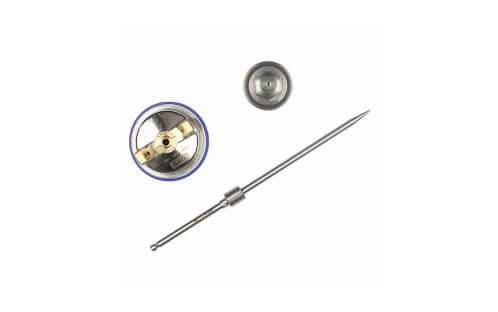
The “SR” nozzles (Spot Repair) make the difference when it comes to seamless transitions. Here you’ll learn which sizes make sense for which job – with clear reference values and pro tips.
Why SR Nozzles?
- Special spray pattern with a “soft” edge zone for invisible transitions.
- Ideal for small repairs such as stone chips, edges, or partial refinishing.
- Reduces sanding and polishing work after painting.
SR Nozzle Sizes at a Glance
| Nozzle Size | Application | Advantages |
|---|---|---|
| 0.8 SR | Finest spot repairs, small scratches & edges | Very fine spray pattern, minimal material use |
| 1.0 SR | Small areas & fade-out blending | Good compromise between material output & control |
| 1.2 SR | Basecoats, spot repair with well-defined blending | Faster application, uniform coverage |
| 1.4 SR | Clearcoat applications in spot repair | Rich flow, even gloss |
Note: Selection depends on paint type, viscosity & desired finish. Reference values from manual & practice.
Spray Distance
SR nozzles: usually 12–15 cm for HVLP, 12–19 cm for RP.
Pressure
Recommended for spot repair: 0.5–2.0 bar (depending on material & nozzle size).
Maximum Pressure
Do not exceed 10 bar at the gun inlet.
Tip: For clearcoat in spot repair, the 1.2 SR or 1.4 SR is often recommended. For basecoat or blending, go with 1.0 SR.
Discover SATA Products Now
Workflow with SR Nozzles (5 Steps)
- Select the nozzle according to the material (Base: 1.0–1.2 SR, Clearcoat: 1.2–1.4 SR).
- Adjust the pressure (starting point 1.5 bar, then check spray pattern).
- Maintain spray distance: consistently 12–15 cm (HVLP) or 12–19 cm (RP).
- Apply paint in thin, overlapping passes, blend out edge areas.
- Check transitions, if necessary, apply a second soft blending pass.
Conclusion
The SR nozzles make the SATAminijet 4400 B the first choice for spot repair. With the right size, you’ll achieve a smooth transition that remains invisible after polishing – true OEM quality on a miniature scale.