





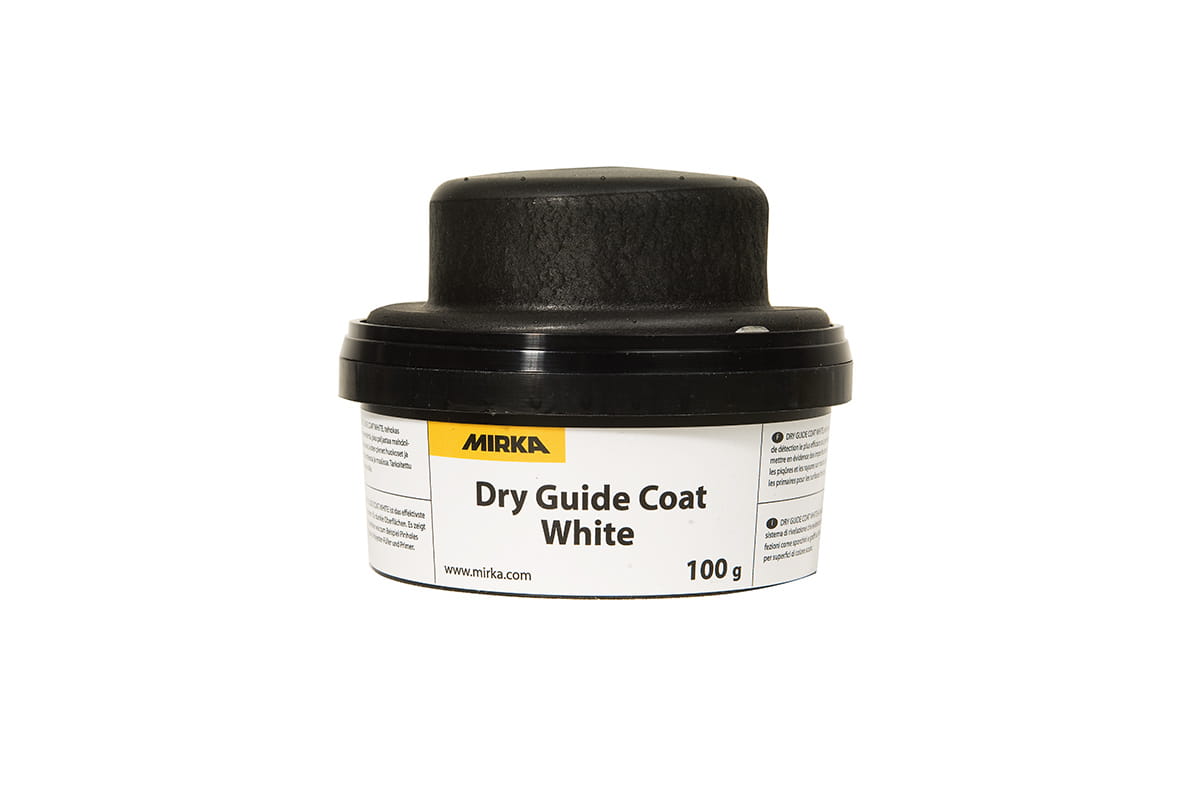


Mirka Golden Finish: set composition
Example of an application-specific finishing set with defined components.
Learn more

Price excl. VAT

Finishing products are selected for final surface processing and assessment. Depending on the product, this may include fine correction, local defect reworking or coordinated cleaning and inspection applications. The term finish does not describe a uniform operating principle. Check precisely whether a product removes material, removes residues or fulfils another final function, and how it fits the existing process.
A single dust inclusion or small defect requires a different arrangement from reworking an entire surface. Select processing area and product specifically to avoid unnecessarily changing neighbouring areas. Before abrasive stages, assess coating condition and available layer thickness. Deep defects cannot generally be solved with ever-finer finishing products.
A coordinated finishing system defines how an existing scratch pattern is refined step by step. Fine abrasives, suitable polishes and pads each perform a specific task. Observe the sequence and intended combinations. One very fine stage cannot automatically bypass deeper marks from preparation.
A residue-removal or inspection product has a different purpose from a durable protective product. Check effect, compatibility and possible residues using technical specifications. Before further coating, suitability for the subsequent process is particularly important. Terms such as silicone-free, paint-compatible or sealing must come only from the specific product information.
Coordinated ranges may identify stages by numbers or colours. Use these markings within the particular manufacturer's system and document the combination used. Keep suitable cloths and pads for the final stage separate. Controlled inspection under suitable lighting shows whether the desired finish has been achieved or targeted reworking is necessary.
Example of an application-specific finishing set with defined components.
Learn moreExample of an abrasive within a defined finishing process sequence.
Learn moreNo. It may also be a fine abrasive, finishing polish or final inspection product. The description of the individual product specifies its function.
Not universally. Initial sanding, defect depth and substrate determine the required sequence. Overly coarse marks may require a suitable preceding processing stage.
Not merely because numbers or colours match. Marking applies within the associated system; when switching, check application and approvals again.
Specify the defects, surface structure and current processing stage. We will help you choose a suitable finishing step.
Enquire nowPlease feel free to contact us by phone or email and we will advise you quickly, competently and without obligation.
+49 7546 3520019
Mon-Fri, 9:00 a.m. - 4:00 p.m