The Compact Professional Spray Gun for Spot Repair – Reference Values, Workflow & Tips
Practical Guide
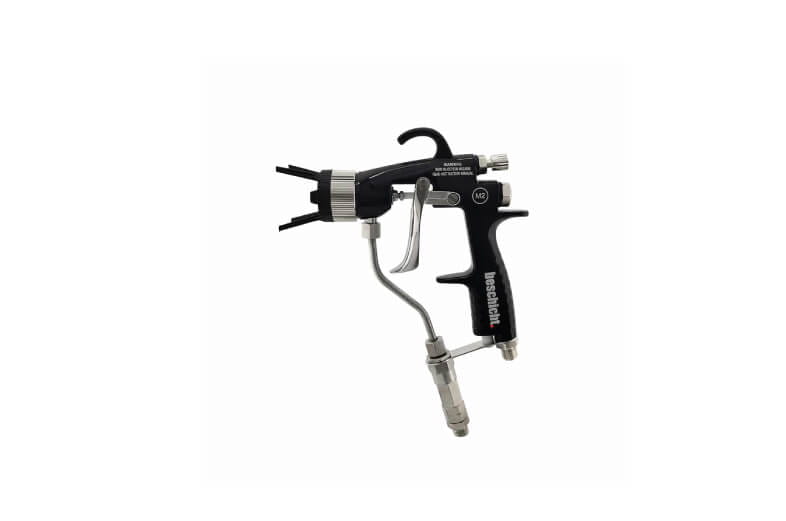
SATAminijet 4400 B: Compact Professional for Spot Repair & Precise Small Parts
How to paint small surfaces cleanly, quickly, and VOC-compliantly with the SATAminijet 4400 B (HVLP & RP) – including reference values, workflow, and troubleshooting.
Two Technologies
HVLP = high transfer efficiency, RP = maximum working speed.
RPS/QCC Compatible
QCC connection, RPS multipurpose cups, and SATA adam compatible.
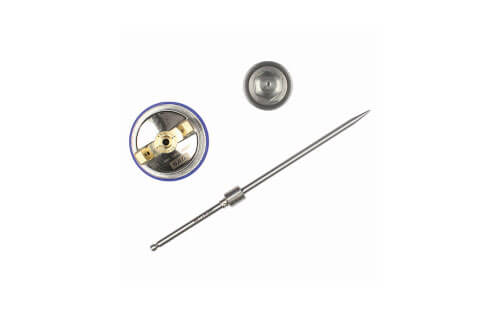
SR Nozzles for Spot Repair
Wide, “soft” fading core area for invisible blending zones.
Variants & Key Data
Variant
Recommended Gun Inlet Pressure*
Recommended Spray Distance*
Air Consumption (Reference)
Available Nozzle Sizes (Excerpt)
HVLP / HVLP SR
approx. 2.0 bar (Spot Repair: 0.5–2.0 bar*)
12–15 cm*
≈ 120 Nl/min
0.3 / 0.5 / 0.8 / 1.0 / 1.1 / 0.8 SR / 1.0 SR / 1.2 SR / 1.4 SR
RP / RP SR
approx. 2.5 bar (Spot Repair: 0.5–2.0 bar*)
12–19 cm*
≈ 200 Nl/min
0.5 / 1.4 / 1.6 / 0.8 SR / 1.0 SR / 1.2 SR / 1.3 / 0.3 SR / 1.3 SR
*Reference values from the operating manual; fine-tune depending on material, density, and viscosity. Max. gun inlet pressure: 10 bar.
Tip: For precise pressures, use a gun pressure gauge (e.g. SATA adam 2 mini). Without a gauge, a rule of thumb is: for every 10 m hose (Ø 9 mm), add approx. +0.6 bar at the pressure regulator to reach the desired gun inlet pressure.
Functional cookies are absolutely necessary for the functionality of the web shop. These cookies assign a unique random ID to your browser so that your unhindered shopping experience can be guaranteed over several page views.
Cookie-Configuration-Hash
PayPal payments
Google Pay payments
Payment provider (Stripe) session
Session:
The session cookie stores your shopping data over several page views and is therefore essential for your personal shopping experience.
Stripe:
The cookie is used by the payment provider to increase security when processing payments on the website.
CAPTCHA integration:
Ein Captcha dient dazu, automatisierte Bots von menschlichen Benutzern zu unterscheiden und so die Sicherheit und Integrität einer Website zu gewährleisten. Es hilft, unerwünschte Aktivitäten wie Spam, Datenmissbrauch oder unbefugten Zugriff zu verhindern.
Activated cookies:
Saves which cookies have already been accepted by the user for the first time.
PayPal payments:
PayPal ist ein Online-Zahlungsdienst, der es Ihnen ermöglicht, sicher und bequem Geld online zu senden und zu empfangen. Mit PayPal können Sie Zahlungen für Waren und Dienstleistungen online tätigen. PayPal bietet verschiedene Zahlungsoptionen, darunter Kreditkarten, Banküberweisungen und das PayPal-Guthaben. PayPal ermöglicht außerdem die Nutzung von Cookies auf dieser Webseite, um Ihr Zahlungserlebnis zu verbessern, Benutzereinstellungen zu speichern und Ihnen personalisierte Angebote bereitzustellen. Durch die Zustimmung zur Verwendung von Cookies können Sie die Funktionen und Vorteile von PayPal optimal nutzen.
Amazon Pay
Cache handling:
The cookie is used to differentiate the cache for different scenarios and page users.
Timezone:
The cookie is used to provide the system with the user's current time zone.
Cookie settings:
The cookie is used to store the cookie settings of the site user over several browser sessions.
Information on origin:
The cookie stores the referrer and the first page visited by the user for further use.
Klarna
Online Metrix
CSRF token:
The CSRF token cookie contributes to your security. It strengthens the security of forms against unwanted hacker attacks.
Allows Google to collect personal data for online advertising and marketing.
Google Advertising
Klaviyo Cookies:
Allow to identify the user when not logged in!
YouTube video
Local Storage:
Stores a timestamp to hide elements for a certain time if desired.
Location maps:
We use OpenStreetMap as tile provider to show you visually the location of our stores and merchants.
Vimeo video
Wishlist:
Die Merkzettel-Funktion in einem Online-Shop ermöglicht es den Besuchern, Produkte zu speichern und später wiederzufinden. Sie können Produkte, die ihnen gefallen oder die sie später kaufen möchten, auf ihren Merkzettel legen, anstatt sie sofort in den Warenkorb zu legen oder zu kaufen.
These cookies are used for statistics and shop performance metrics.
Matomo Tracking:
Tracking statistics for the optimization of user workflows. No personal data is stored.
Morayne:
Enables the optimization of various functions, such as the search in our shop.
Google Analytics
Conversion and usertracking via Google Tag Manager:
Der Google Tag Manager ermöglicht die Verwaltung und Implementierung von verschiedenen Tracking-Codes und Tags auf einer Website, einschließlich des Google Analytics-Tags.
Microsoft Clarity:
Mit Clarity von Microsoft analysieren wir die Verwendung unseres Shops um zu verstehen, womit wir den Shop noch besser machen können.
Tracking cookies help the shop operator to collect and evaluate information about the behaviour of users on their website.
Leadinfo:
Mit Leadinfo versuchen wir festzustellen, welche Interessanten sich mit unserem Sortiment befassen, um gezielt für Service zu den verschiedenen Bereichen zur Verfügung zu stehen.
OpenAI Tracking:
Conversion-Messung für Anzeigen in ChatGPT (OpenAI). Speichert eine Klick-Kennung aus der Anzeige (30 Tage) und eine zufällige Browser-Kennung (1 Jahr), um Bestellungen den Anzeigen zuzuordnen.
Meta Pixel (Facebook/Instagram):
Conversion-Messung und Zielgruppen für Werbung auf Facebook und Instagram. Speichert eine Browser- und Klick-Kennung (bis 90 Tage), um Besuche und Bestellungen Anzeigen zuzuordnen.
Google Analytics:
Google Analytics is used for traffic analysis of the website. Thereby statistics about website activities can be created and read out.
LinkedIn Insight Tag:
Conversion-Messung und Zielgruppen für Werbung auf LinkedIn. Speichert eine Browser- und Klick-Kennung (bis 180 Tage), um Besuche und Anfragen Anzeigen zuzuordnen.
Salesviewer:
Salesviewer ist ein Service für Online-Shops, der Echtzeitinformationen über das Besucherverhalten und potenzielle Kunden liefert. Es ermöglicht Shop-Betreibern, den Website-Traffic zu analysieren, Leads zu identifizieren und Verkaufschancen zu maximieren, indem sie Einblicke in das Besucherverhalten und deren Interaktionen auf der Website erhalten.
These cookies are used to collect and process information about the use of the website by users, in order to subsequently personalise advertising and/or content in other contexts.
E-Business Intelligence:
Mit E-Business Intelligence versuchen wir unser Portfolio auf Ihre Bedürfnisse abzustimmen.
Marketing cookies are used to display advertisements on the website in a targeted and individualized manner across multiple page views and browser sessions.
Google conversion tracking:
The Google Conversion Tracking Cookie is used to track conversions on the website effectively. This information is used by the site operator to target Google AdWords campaigns.
Google AdSense:
The cookie is used by Google AdSense to promote advertising efficiency on the website.
Service cookies are used to provide the user with additional offers (e.g. live chats) on the website. Information obtained via these service cookies may also be processed for site analysis.
KI-Chatassistent:
Ermöglicht die Kommunikation mit unserem KI-Assistenten. Ihre Eingaben werden dabei an unseren Server und an OpenAI übermittelt. Der Gesprächsverlauf wird in Ihrem Browser gespeichert und von uns zur Qualitätssicherung für 90 Tage protokolliert.
Doofinder:
The cookie is used to track user interaction with the site search. The data can be used to optimize the search function.
Hubspot Chat:
HubSpot ist ein Kundenservice- und Vertriebstool, das als Chat auf einer Shopseite integriert werden kann. Es ermöglicht den Besuchern, direkt mit dem Kundenservice in Echtzeit zu interagieren, Fragen zu stellen, Unterstützung zu erhalten und Informationen über Produkte oder Bestellungen zu erhalten.
Trusted Shops:
Mithilfe von Trusted Shops geben wir Ihnen die Möglichkeit Ihre Bestellungen bei uns abzusichern.
We respect your privacy
This website uses cookies to provide you with the best possible functionality and to personalize our advertising activities. You can save your cookie choices at any time .More information.
(function () {
"use strict";
// Only on the Produktfinder page
if (
!/^\/baenderfinder-mirka-test\/?$/.test(
window.location.pathname
)
) {
return;
}
const normalize = (value) =>
(value || "").replace(/\s+/g, " ").trim();
function isTarget(text) {
const value = normalize(text);
return (
value.includes("Passende Produkte finden") &&
value.includes("Produkte entdecken") &&
value.length < 160 &&
!value.includes("Schleifmittel") &&
!value.includes("Schleifmaschinen")
);
}
function hideFinderCard() {
const root = document.querySelector(
"main, .content-main, #main"
);
if (!root) return;
const elements = root.querySelectorAll(
"div, article, li, button, a, section"
);
for (const element of elements) {
if (!isTarget(element.textContent)) continue;
if (
element.closest(
"nav, header, footer, .navigation-flyout, .navigation-offcanvas"
)
) {
continue;
}
let card = element;
// Find the complete card container
while (
card.parentElement &&
card.parentElement !== root &&
isTarget(card.parentElement.textContent)
) {
card = card.parentElement;
}
card.style.setProperty(
"display",
"none",
"important"
);
}
}
function init() {
hideFinderCard();
let scheduled = false;
const observer = new MutationObserver(() => {
if (scheduled) return;
scheduled = true;
requestAnimationFrame(() => {
scheduled = false;
hideFinderCard();
});
});
observer.observe(document.body, {
childList: true,
subtree: true
});
}
if (document.readyState === "loading") {
document.addEventListener(
"DOMContentLoaded",
init,
{ once: true }
);
} else {
init();
}
})();
Request sent successfully
Request could not be sent because a problem occurred. Please try again.