
Practical Guide
Clearcoat Perfection with the SATAjet X 5500: Using I vs. O Correctly
This focus article shows how to reproducibly achieve glossy clearcoat surfaces with the SATAjet X 5500. You’ll learn when the I or O nozzle pattern excels, which starting values have proven effective (reference values), and how to quickly fix common clearcoat issues.

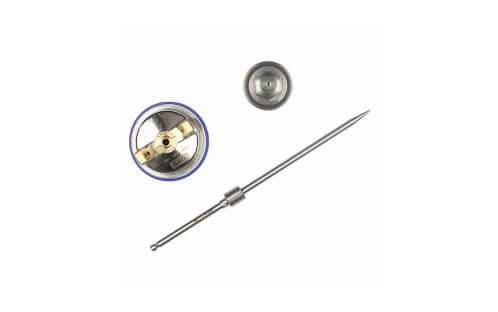
I Nozzle Pattern
Concentrated/powerful – ideal when speed matters and edges must be sharp.
O Nozzle Pattern
Soft/wide – very uniform application, good for large areas/flow.
Digital Option
Read inlet pressure precisely – especially useful for clearcoat finishing.
Pro Tip:
For high-gloss large areas, use the O nozzle pattern, 2 full coats, and steady speed. Test flow tendency on a sample panel first and fine-tune pressure in 0.1-bar steps.
Starting Values for Clearcoat (Reference Values)
| Setup | HVLP | RP |
|---|---|---|
| Inlet Pressure | approx. 2.0 bar | approx. 2.1–2.4 bar |
| Nozzle Size (X) | 1.3–1.4 (O for softer application) | 1.2–1.3 (I for more punch, O for flow) |
| Spray Distance | approx. 15–18 cm | approx. 18–20 cm |
Adjust depending on clearcoat system/temperature; always follow material data sheet.
Quick Workflow for Clearcoat
- Spray a sample panel with chosen nozzle pattern, check flow.
- Apply first full coat at constant speed, 70% overlap.
- Let it flash off briefly (as per TDS), apply second full coat.
- Do edges/recesses first, then close surfaces “wet-on-wet.”
- Fine-tune: adjust inlet pressure in 0.1-bar steps, vary distance ±2 cm.
- Drying and final inspection; remove dust inclusions as needed.
Clearcoat FAQ
I or O for high gloss?
Usually O for smooth flow; I for more compact application on edges/spots.
Which nozzle to start with?
RP 1.2–1.3 or HVLP 1.3–1.4 are common starting values (reference).
How to minimize overspray?
Use HVLP, keep pressure moderate, distance appropriate, clean airflow.
Is the digital version useful?
Yes, helpful for precise inlet pressure with sensitive clearcoat finishes.
Maintenance for consistent finish?
Keep nozzle/needle clean, check seals, ensure air is dry and oil-free.