How to Set Up and Use the MASPRA M140-R AirCombi Spray Gun
The MASPRA M140-R combines a WAGNER nozzle system with air-assisted high-pressure atomization. In this practical guide, we explain what matters when selecting, setting up, optimizing the spray pattern, operating and maintaining the gun – and how to systematically identify common problems.

What is the MASPRA M140-R?
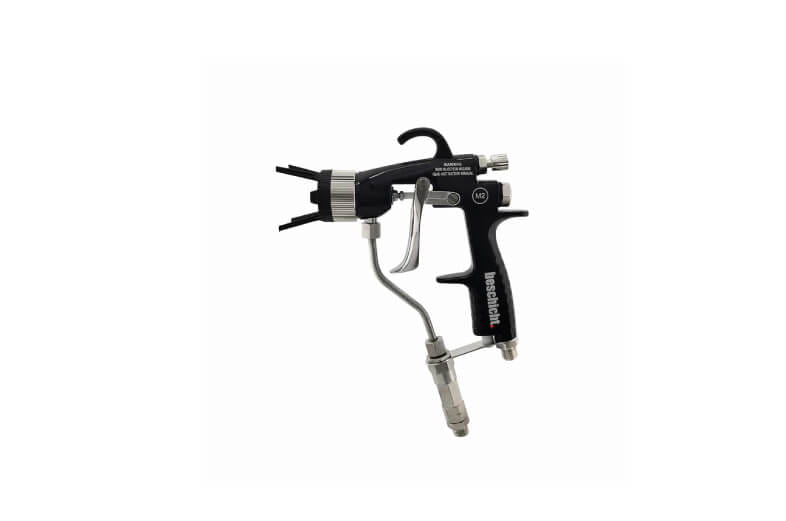
The MASPRA M140-R is an AirCombi spray gun for professional coating applications. With this process, the coating material is already pre-atomized under pressure through the nozzle and then supported by additional air at the air cap.
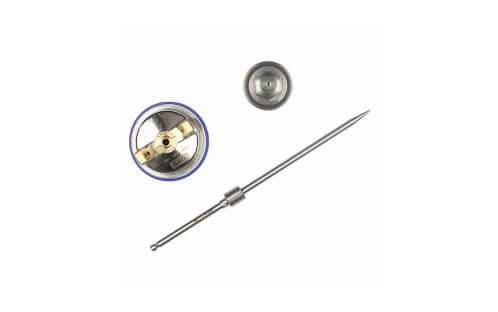
The M140-R is available in the WAGNER version with a swivel connection and long filter housing. It is supplied with a red air cap and 411 nozzle. The maximum permissible material pressure is 250 bar.
| Feature | MASPRA M140-R | Practical benefit |
|---|---|---|
| System | AirCombi | High-pressure atomization with additional air assistance |
| Nozzle system | WAGNER | Suitable for integration into compatible WAGNER applications |
| Standard nozzle | 411 | Starting configuration for further adjustment to the material and workpiece |
| Air cap | Red | Component for air assistance and spray pattern shaping |
| Max. pressure | 250 bar | Designed for professional high-pressure coating systems |
| Connection | 1/4" | Common connection size in compatible AirCombi systems |
| Design | Swivel connection, long filter housing | More flexible hose routing and filtration before the nozzle |
Why AirCombi?
AirCombi – often referred to as air-assisted airless – combines two operating principles. The material pressure performs a large part of the atomization, while additional air at the spray gun is used for fine adjustment of the spray pattern.
In practice, this combination enables controlled application, especially when pure high-pressure atomization does not provide the desired surface quality. The decisive factor is the correct interaction between material, nozzle, material pressure, air volume, spraying distance and working speed.
Recommended Basic Settings – as a Guideline
There is no universal pressure setting for the M140-R that works with every coating material. Viscosity, solids content, nozzle size, hose length, pumping equipment and the desired finish all have a significant influence on the result.
| Parameter | Recommended starting point | Optimization |
|---|---|---|
| Material pressure | As low as practical for stable atomization | Increase gradually until the spray pattern is closed and uniform |
| Atomizing air | Start with a low setting | Increase only as much as necessary for the desired fine atomization |
| Nozzle | Standard 411 nozzle | Select a suitable nozzle if a different flow rate or fan width is required |
| Maximum pressure | Do not treat as a working setting | Never exceed 250 bar |
Note: The values and procedures in this section are practical guidelines. The technical specifications of the coating material, pumping equipment and respective system components always take precedence.
Professional Workflow: Set Up the M140-R in 7 Steps
- Check the system: Inspect the gun, hose, filter, nozzle and air cap for correct installation and visible damage.
- Prepare the material: Prepare the coating material according to its technical data sheet and filter it if necessary.
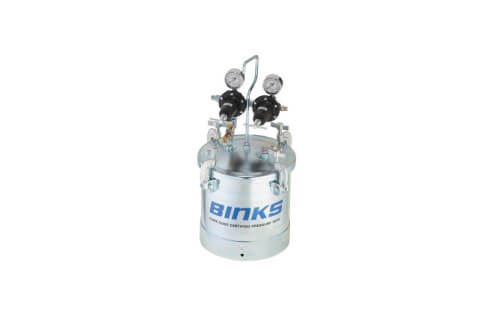
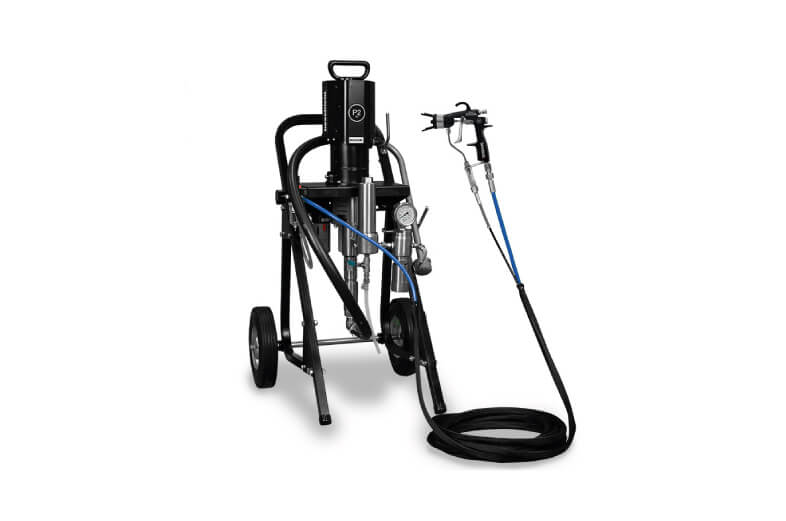
- Set up the material supply: Start the system with a low initial setting and feed the material evenly to the spray gun.
- Test the first spray pattern: Spray onto test cardboard or another suitable test surface and assess distribution, edge zones and atomization.
- Optimize material pressure: Increase pressure only until material atomization is stable. The maximum value of 250 bar is a technical limit, not a target setting.
- Fine-tune the air: Adjust atomizing air step by step to improve edge zones and droplet size without using unnecessary air.
- Maintain a consistent technique: Keep the spray gun as perpendicular to the surface as possible and maintain a consistent distance and movement speed.
Common AirCombi Spraying Problems
1. Uneven or streaky spray pattern
- Check the nozzle and air cap for deposits and clean them properly.
- Adjust the material pressure gradually.
- Inspect the nozzle for wear or damage.
2. Atomization is too coarse
- Check whether the material pressure is sufficient for the material and nozzle.
- Carefully increase the atomizing air.
- Check viscosity and material temperature according to the material data sheet.
3. Excessive overspray
- Reduce air pressure or air volume.
- Check whether the material pressure is unnecessarily high.
- Optimize spray distance and gun movement.
4. Material flow fluctuates or stops
- Check the long filter housing and other filters for contamination.
- Check the nozzle for partial blockage.
- Inspect the material supply, suction system and pumping equipment.
Maintenance: 5 Points for Reliable Operation
- Fully relieve the pressure before removing the nozzle, filter or other pressurized components.
- Clean the nozzle and air cap regularly and do not use unsuitable hard tools that could damage precision openings.
- Check the filters, especially when using materials with a higher solids content or when changing colors frequently.
- Inspect seals and connections whenever material or air leakage is detected.
- Replace wear parts in good time instead of permanently compensating for a poor spray pattern by increasing pressure.
Frequently Asked Questions About the MASPRA M140-R
What is the maximum pressure of the MASPRA M140-R?
The specified maximum material pressure is 250 bar. This value represents the technical upper limit and should not be considered a recommended standard working pressure.
Which nozzle is supplied with the M140-R?
The WAGNER version of the M140-R is supplied with a 411 nozzle and a red air cap.
Is the 411 nozzle suitable for every material?
No. The optimum nozzle depends on factors including material viscosity, required flow rate, workpiece size and desired fan width. A different nozzle may be more suitable for other applications.
Why does the gun have a long filter housing?
Filtration before the nozzle supports reliable material flow and reduces the risk of particles or contamination reaching the nozzle opening. The filter must therefore be checked regularly.
When should I adjust material pressure and when should I adjust the air?
First, achieve stable material atomization using the lowest practical material pressure. Then adjust the additional air to obtain the desired fineness and shape of the spray pattern.
MASPRA M140-R for Your AirCombi System
Do you need the MASPRA M140-R with WAGNER nozzle system or want to check which nozzle and system configuration is suitable for your coating application? You can find all product details directly at Beschicht.com.
View MASPRA M140-RConclusion
The MASPRA M140-R is a professional AirCombi spray gun with a WAGNER nozzle system, red air cap, 411 nozzle, swivel connection and long filter housing. For reproducible coating results, however, the highest possible pressure is not the decisive factor. What matters is the correct interaction between nozzle, material pressure, air assistance, material properties and consistent spray-gun handling. Starting from a low basic setting and optimizing the spray pattern step by step makes it possible to adjust the system specifically to each application.