
How to Set Up the MASPRA M110 OPTIMA 2100: Practical Guide for a Clean AirCombi Spray Pattern
An AirCombi spray gun does not achieve its best finish through high pressure alone. The key is the interaction between the nozzle, material pressure, atomizing air, working distance and consistent gun movement. This guide explains how to systematically set up the MASPRA AirCombi M110 spray gun in the OPTIMA 2100 version, identify common spray-pattern problems and maintain the gun in everyday operation.
MASPRA M110 OPTIMA 2100 at a Glance
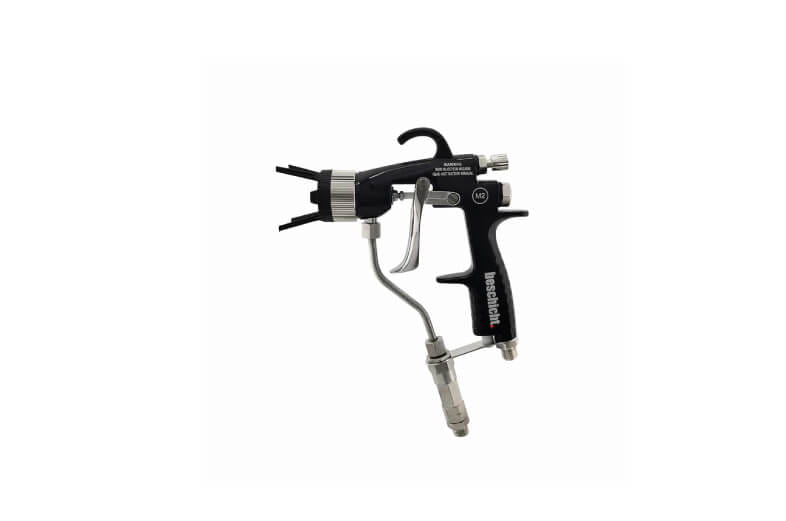
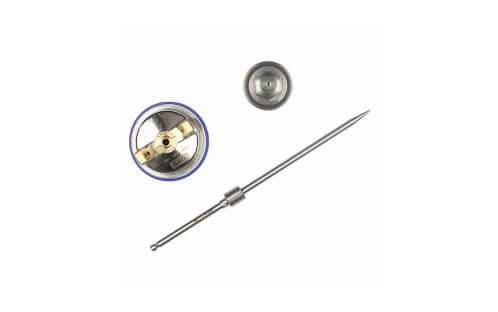
The M110 is an AirCombi spray gun equipped with a swivel joint and a long filter housing. The OPTIMA 2100 version described here includes an AirCap and the 428 nozzle. The system uses a hexagonal nozzle system and is designed for a maximum operating pressure of 250 bar.

| Feature | Specification | Practical Benefit |
|---|---|---|
| Model | M110 · OPTIMA 2100 | AirCombi application for controlled coating work |
| Nozzle system | Hexagonal / OPTIMA 2100 | Suitable nozzles can be selected according to the coating material and required spray width |
| Included | AirCap + 428 nozzle | A direct starting point for the first test spray |
| Max. operating pressure | 250 bar | Wide operating range – 250 bar is a limit, not a recommended basic setting |
| Connection | 1/4" | Integration into suitable AirCombi systems and hose configurations |
| Handling | Swivel joint + long filter housing | Greater freedom of movement and additional filtration directly at the gun |
View the M110 OPTIMA 2100
Check the technical product data or select the right AirCombi configuration for your application.
Discover the MASPRA M110 OPTIMA 2100Recommended Basic Setup: A Systematic Starting Point
The optimum setup depends on the type of coating, viscosity, solids content, required film thickness, nozzle size, pump system and component geometry. The following points are therefore intentionally presented as practical guidelines and a setup strategy, not as fixed MASPRA pressure specifications.
| Parameter | Starting Point | Optimization |
|---|---|---|
| Nozzle | Create a test pattern using the included 428 nozzle | Adjust nozzle size and spray angle to material flow and component width if required |
| Material pressure | Start as low as practical | Increase gradually until material supply and spray fan are stable; observe the maximum permissible system pressure |
| Atomizing air | Low setting | Increase only until coarse edges and uneven atomization disappear |
| Working distance | Approx. 150–200 mm as a general practical guideline | Keep it constant and adapt it to the material and component geometry |
| Overlap | Approx. 50% as a general practical guideline | Aim for an even film build without visible spray passes |
| Gun movement | Keep the gun as perpendicular to the surface as possible | Maintain a constant distance and speed throughout the stroke |
Note: The working-distance and overlap values are general air-assisted application guidelines from a supplementary technical source and are not model-specific MASPRA specifications. The material data sheet, system manual and applicable safety requirements always take priority.
Professional Workflow in 7 Steps
- Prepare the material: Homogenize the coating according to the manufacturer's instructions, filter if necessary and check the permissible application viscosity.
- Check the gun and nozzle: Inspect the nozzle, AirCap, filter housing and connections for cleanliness, correct seating and visible damage.
- Stabilize material supply: Start with a low material pressure and fully trigger the gun. Increase the pressure only until the material flow is reliable and uniform.
- Fine-tune atomizing air: Start with a low air setting and increase it gradually until a uniform spray fan with cleanly atomized edges is achieved.
- Perform a test spray: Evaluate fan width, material distribution and droplet size on a suitable test panel before coating the actual workpiece.
- Apply consistently: Hold the gun as perpendicular as possible, maintain a constant distance and overlap parallel passes evenly.
- Document the result: For repeat jobs, record the material, nozzle, system parameters and result. This makes a successful setup easier to reproduce.
Troubleshooting: Four Common Spray Problems
1. Spray pattern is uneven or heavier on one side
- Check the AirCap and nozzle for dried material or contamination and clean them carefully.
- Inspect the AirCap; if the defect follows the air cap after its position is changed, the cause is often in the AirCap area.
- If the pattern remains unchanged, inspect the nozzle for wear or damage.
2. Gun spits or material flow pulsates
- Check the material supply – an empty or interrupted feed can draw air into the system.
- Check that the nozzle and material connections are correctly seated.
- Inspect the filter and material path for blockages, leaks or air ingress.
3. Gun sprays little or no material
- Check the material supply and fill level.
- Inspect the filter housing and nozzle for deposits or blockages.
- Check adjustment and material valves as well as the upstream pump supply.
4. Excessive overspray or dry finish
- Reduce atomizing air and perform another test spray.
- Check the working distance: excessive distance can increase material loss and dry spray.
- Assess nozzle size, material pressure and material viscosity together instead of simply increasing air pressure.
Maintenance: Five Points for Reliable Operation
- Relieve pressure before maintenance: Shut off the air and material supply and safely relieve the remaining system pressure.
- Clean filters regularly: Check the material and air filters to prevent blockages and uneven supply.
- Keep the nozzle and AirCap clean: Remove deposits early and do not damage delicate nozzle or air openings with unsuitable metal tools.
- Flush after material changes and at the end of work: Use a cleaning medium compatible with the coating and wetted components, and flush at the lowest practical pressure.
- Check for wear and leaks: Regularly inspect the gun, material hoses, connections and moving parts, and lubricate suitable moving components only with silicone-free lubricant.
FAQ: MASPRA M110 OPTIMA 2100
Which nozzle is supplied with the MASPRA M110 OPTIMA 2100?
The version described includes an AirCap and the 428 nozzle. Whether this nozzle is optimal for a particular coating depends on the material, required flow rate, spray width and surface-quality requirements.
What is the maximum pressure of the M110?
The specified maximum operating pressure is 250 bar. This value is a technical upper limit and should not be interpreted as the standard working pressure.
Which nozzle system does the OPTIMA 2100 version use?
The M110 OPTIMA 2100 uses a hexagonal nozzle system. The MASPRA range also includes compatible OPTIMA 2100 components such as hexagonal AirCaps and seals.
What is the best way to adjust the spray pattern?
First stabilize the material supply and material pressure. Then gradually increase the atomizing air until a uniform spray fan is achieved. Check every adjustment with a test spray.
When should the gun be cleaned or flushed?
At the latest before the material dries, when changing material or color, at the end of the working day and before extended storage or repairs. The AirCap, nozzle and filter should also be checked regularly for deposits.
Conclusion
The MASPRA M110 OPTIMA 2100 combines an AirCombi system with hexagonal nozzle technology, a swivel joint and a long filter housing. For a reproducible finish, however, the highest possible pressure is not the deciding factor. What matters is the systematic interaction between the correct nozzle, the lowest functional material pressure, the required atomizing air and consistent gun movement. Test sprays, controlled adjustment of individual parameters and consistent cleaning of the nozzle, AirCap and filter provide the best basis for stable coating results.
Looking for the Right AirCombi Solution for Your Application?
Explore the MASPRA M110 OPTIMA 2100 and get support in selecting the right gun, nozzle and system components.
View the MASPRA M110 OPTIMA 2100