
SATA jet X: Settings, 1.4 Nozzle, HVLP vs RP—How to Achieve Flawless Finishes
A compact guide to the new SATA jet X: the key working values, the difference between HVLP and RP, when the 1.4‑nozzle shines, plus maintenance and quick troubleshooting for consistently excellent results.
.png?ts=1758118605)
Product Overview: SATA jet X Variants
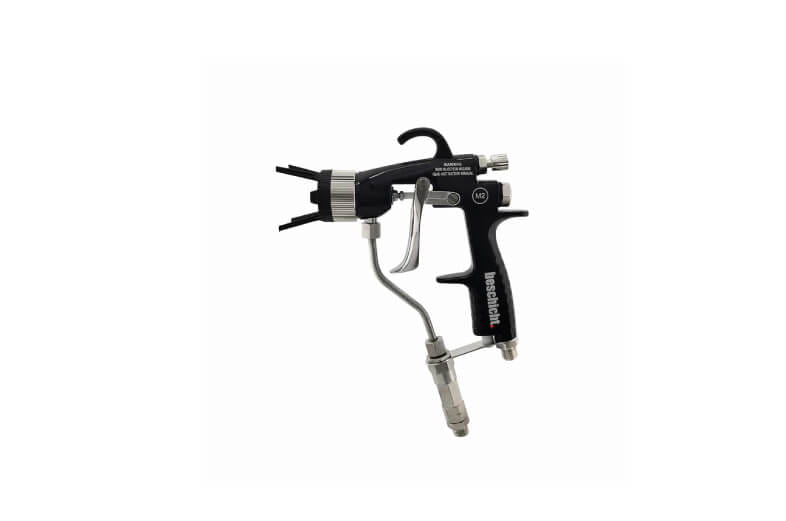
The SATA jet X is available as HVLP and RP—both with precise material control and, depending on model, digital pressure readout. Quick overview:
| Variant | Typical Use | Advantages | Note |
|---|---|---|---|
| HVLP 1.4 Fine Mist | Basecoats, waterborne, spot & smart repair | Very high transfer efficiency, crisp edges, low overspray | Slightly slower material build than RP |
| RP 1.4 High Speed | Clearcoats, fine surfacer, larger panels | Fast material laydown, very smooth flow | Slightly higher air demand |
| Digital (usually with gauge) | Repeatable results, documentation | Accurate pressure control at the gun | Check battery regularly |
Buy Now
Go directly to the matching variants on Beschicht.com:
Max. two links on this page—both point to our product pages.
Recommended Baseline Settings (Guidelines)
HVLP 1.4 (Basecoat, Waterborne)
- Inlet pressure: approx. 1.8–2.0 bar
- Material control: 1.5–2 turns open
- Airflow: high, full spray pattern
- Distance: 12–15 cm
- Passes: 1–2 light coats, optional effect coat
RP 1.4 (Clearcoat)
- Inlet pressure: approx. 2.0–2.2 bar
- Material control: 1.75–2.25 turns open
- Airflow: high, slightly oval pattern
- Distance: 15–18 cm
- Passes: 1 closed + 1 flow coat
Note: Values are practical guidelines. Always follow paint manufacturer instructions (viscosity, temperature, hardener/thinner).
Pro Workflow for Consistent Quality
- Prepare the substrate: Dust‑free, degreased, 20–23 °C, dry air.
- Check nozzle/needle: Clean, undamaged, correctly assembled.
- Set pressure: Verify at the grip on digital models; adjust as needed.
- Test spray pattern: Uniform, closed edge, no droplets.
- Application: Keep the gun parallel, 70–75% overlap, even speed.
- Flash/flow: Follow spec; for clearcoat, slightly reduce last pass for gloss.
Quick Troubleshooting
Orange Peel
- Increase pressure slightly (0.1–0.2 bar)
- Reduce material amount a bit
- Increase distance slightly
Runs/Sags
- Back off material control slightly
- +2–3 cm distance
- Extend intermediate drying time
Dry Edges
- Reduce air/pressure slightly
- Increase overlap
- Check viscosity (thinner)
Patchy Effect Coat
- HVLP: Final effect pass from slightly more distance
- Tune atomization for homogeneity
- Maintain even gun speed
3‑Minute Maintenance
- Flush with suitable cleaner right after painting.
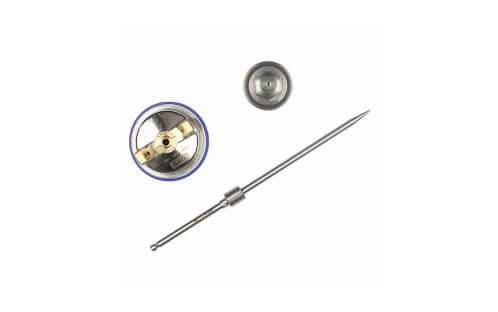
- Clean nozzle, air cap, needle separately—no hard brushes/wires.
- Lightly oil seals and needle (gun‑safe oil).
- Digital model: check battery/seal.
- Replace cup filter regularly.
FAQ: Common Questions
- When HVLP, when RP?
- HVLP for fine, controlled atomization (basecoat, spot repair). RP for fast coverage with a very smooth flow (clearcoat, larger panels).
- Is 1.4 mm truly universal?
- Yes, 1.4 is the versatile standard. For very thin basecoats try 1.2–1.3; for “heavy” clearcoats try 1.3.
- How do I set the spray pattern?
- Open air cap fully, open material gradually, test on a panel: even edge, no droplets, no “banana shape”.
- Why a digital gauge?
- It enables repeatable results. Actual inlet pressure is controlled at the gun—very helpful with long hoses.
- What air requirements does the jet X have?
- Dry, clean compressed air is critical. Ensure suitable compressor capacity and water separators/filters.
Conclusion
The SATA jet X is a highly precise spray gun—HVLP or RP. With the guideline values above, a 1.4‑nozzle, and clean maintenance, you’ll achieve consistently top‑tier finishes.