

Surface profile measurement: replica tape & gauge for reliable profile values
Learn more about the importance of replica tape and gauge for precise surface profile measurements.
Learn more
Price excl. VAT


Price excl. VAT

Price excl. VAT

Price excl. VAT


Price excl. VAT

Price excl. VAT
Roughness & surface profile measurement covers both contact stylus and profilometer methods and 3D areal measurements to ISO 4287, ISO 4288 and ISO 25178. For blasted surfaces, blast profile tests are carried out according to ISO 8503 and ASTM D4417 – using replica tape, depth gauges or comparison plates. Supplemented by calibration standards, statistical functions and digital reports, the methods ensure standard-compliant documentation of surface quality.
Used in blasting shops, steel and plant construction, shipyards, pipeline and tank construction, automotive, mechanical engineering and by coaters. Precise surface characterization secures adhesion, optimizes the coating appearance and documents the quality of surface preparation – with audit-proof records from laboratory to construction site.
Roughness measurement (ISO 4287 / ISO 4288): Selecting a suitable evaluation length and cut-off parameters (λc/λs) in line with the surface structure. Using appropriate contact stylus probes and filters for precise acquisition of profile values. Parameters such as Ra, Rz, Rq and Rmr are evaluated according to the specified standards.
3D areal measurement (ISO 25178): Optical acquisition of complex surface structures using 3D areal methods to determine S-parameters (e.g. Sa, Sz, Sq). This method enables topographical analysis of surfaces and microstructures with high reproducibility.
Blast profile measurement (ISO 8503 / ASTM D4417): Determination of surface profile on blasted steel substrates with replica tape (Method B) or depth gauge (Method C). Comparison and verification with standardized ISO 8503-1 reference plates.
Documentation: Results are clearly assigned via photos and labels / QR codes and can be exported as PDF / CSV reports. Serial number tracking and limit checking ensure traceability within the quality assurance workflow.
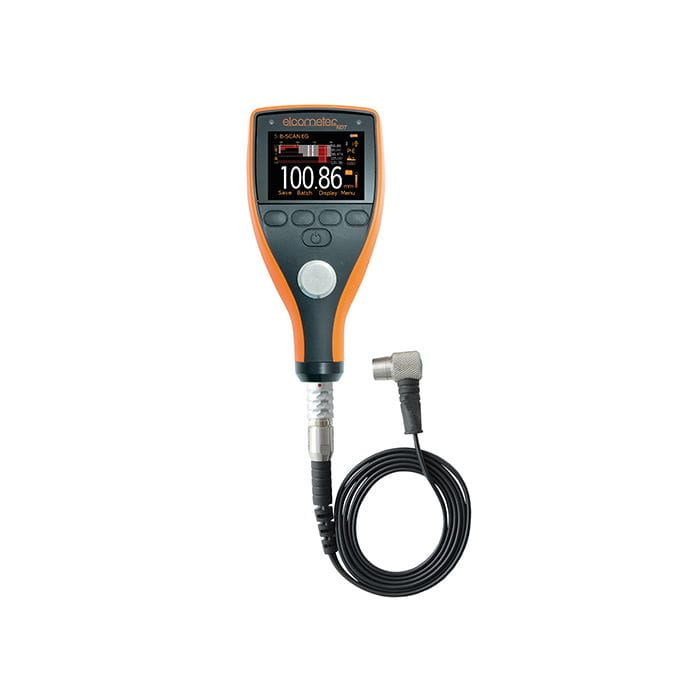
The range includes profilometers (contact stylus and optical), 3D areal systems, replica tape kits, digital depth gauges, comparison plates and step-height and reference standards. These are complemented by apps/cloud solutions and interfaces to digital QA systems. We define scope of testing, reference standards (ISO 4287/4288/25178, ISO 8503, ASTM D4417) and a measurement location plan and integrate the instruments into QA workflows, photo and report archives and audit processes. The result: reproducible surface parameters with full traceability.
Go directly to roughness & surface profile measurement – or to consulting & instrument configuration.
Learn more about the importance of replica tape and gauge for precise surface profile measurements.
Learn moreHow structured consulting and suitable measuring technology increase process reliability in coating.
Learn moreFor roughness, ISO 4287 (parameters such as Ra, Rz) and ISO 4288 (rules for evaluation) and for 3D areal measurements ISO 25178 apply. For surface profile on blasted steel, ISO 8503 and ASTM D4417 are relevant (replica tape/Method B, depth gauge/Method C as well as comparison plates).
Contact stylus profilometers are suitable for flat/slightly curved surfaces and provide Ra/Rz according to ISO 4287/4288; 3D areal optics capture complex structures in accordance with ISO 25178. For blasted steel, blast profiles are determined using replica tape or depth gauge in accordance with ISO 8503/ASTM D4417; comparison plates support visual assessment.
By selecting appropriate evaluation lengths/filters, using clean samples, correct probe/tape pressure, traceable calibration standards (step height/reference plates), measurement location plans, repeat measurements, statistics/limit checking as well as complete protocols with photos, QR/labels and PDF/CSV reports.
We configure profilometers, replica tape kits, depth gauges and comparison plates including calibration standards, measurement location plans and documentation – in compliance with ISO 4287/4288/25178, ISO 8503 and ASTM D4417. The result: audit-proof records, reliable approvals and minimal rework.
Request nowPlease feel free to contact us by phone or email and we will advise you quickly, competently and without obligation.
Mon-Fri, 9:00 a.m. - 4:00 p.m