Respiratory protection technology: an overview of the legal requirements and best practices
Respiratory protection technology plays a crucial role in occupational safety, especially in environments where workers are exposed to hazardous substances or particles. Whether in the construction industry, in chemical plants or for fire brigades – the right respiratory protection technology can save lives. However, in addition to the technical equipment, the legal requirements that regulate the use and maintenance of this equipment are also of central importance. In this blog post, we provide an overview of the key legal requirements and best practices for handling respiratory protection technology.
Legal basis for the use of respiratory protection technology
In Germany, the use of breathing apparatus in the workplace is governed by various laws and regulations. The most important of these include:
- The Occupational Safety and Health Act (ArbSchG ): This requires employers to take measures to protect the health and safety of their employees. This includes the use of respiratory protection technology when necessary.
- Regulation on safety and health protection when using personal protective equipment (PSA-BV ): This regulation stipulates that respiratory protective devices are considered personal protective equipment and must therefore meet high safety requirements.
- Technical Rules for Hazardous Substances (TRGS ): These rules specify which breathing apparatus must be used depending on the type of hazardous substance.
- DGUV regulations: The German Social Accident Insurance provides specific requirements and recommendations for the use of respiratory protective devices in its regulations and rules.
Selection and use of respiratory protection technology
Selecting the right respirator depends on the type of exposure and the specific working conditions. There are two main types of respirator:
- Filtering devices: These devices filter pollutants out of the air. They are only suitable if there is sufficient oxygen in the ambient air and the pollutant concentration is not too high.
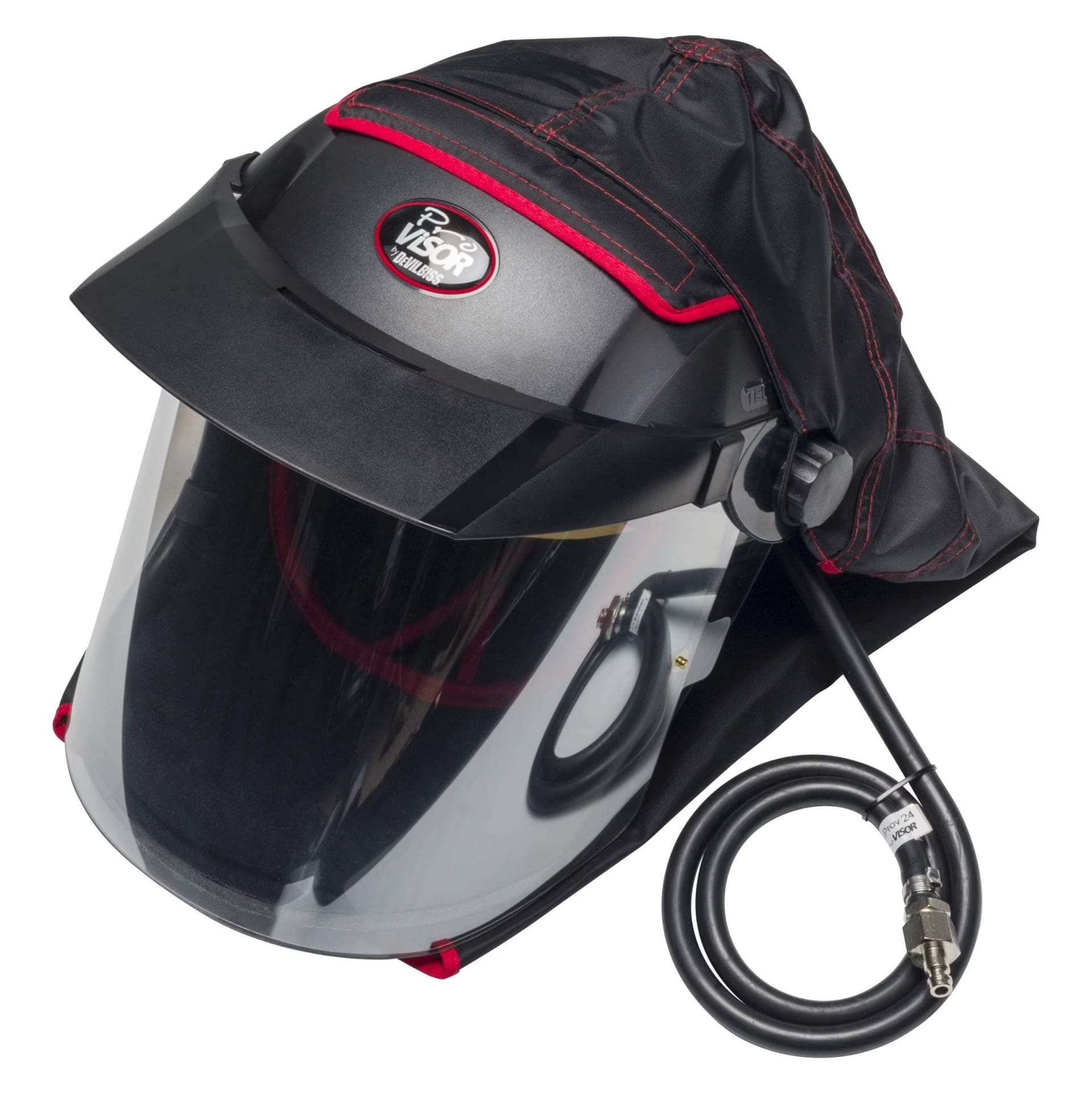
- Self-contained breathing apparatus: This equipment supplies the wearer with breathing air from a separate source and is necessary in environments where there is a lack of oxygen or extremely high concentrations of pollutants.
When using breathing apparatus, the following points must be observed:
- Training and instruction: Employees must be trained in the correct use of respiratory protective devices. This includes how to put them on and take them off, how to maintain them properly and how to regularly check that they are working properly.
- Fit test: Before the first use and regularly thereafter, fit tests should be carried out to ensure that the device fits tightly and functions optimally.
- Regular maintenance: Respiratory protective devices must be regularly maintained and inspected to ensure their functionality. The manufacturer's specifications and legal regulations must be observed.
Documentation requirements and liability
Companies are obliged to keep comprehensive records of the use of respiratory protective devices. This includes employee training, the results of fit tests, and maintenance and inspection logs. This documentation is not only important to be able to prove that all necessary measures have been taken in the event of an accident, but also to meet legal requirements.
Employers are responsible for providing suitable respiratory protective devices and ensuring that they are used properly. In the event of violations of the legal requirements, there is a risk not only of fines, but also of civil and criminal proceedings.
Best practices for the safe use of respiratory protection technology
To ensure maximum protection for employees, the following best practices should be observed:
- Regular training and refresher courses: Employees should not only be trained once, but regularly in how to use respiratory protective devices.
- Ensuring acceptance of use: A respirator can only provide effective protection if it is actually worn. Therefore, devices should be selected that are comfortable and that will be well received by the wearer.
- Continuous monitoring: The work environment should be continuously monitored for changes that could affect the use of respiratory protective equipment.
Protect your employees and fulfil legal requirements – with the right respiratory protection technology, you are on the safe side!
Discover respiratory protective devices now