

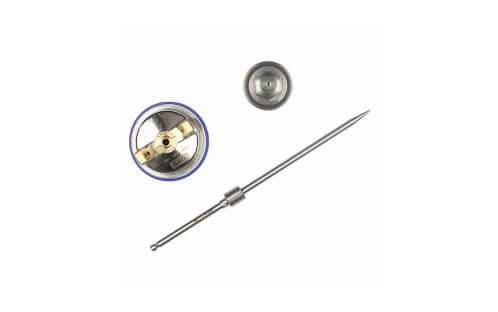

Graco FRP-XG 16R170 in Practical Use
This gel system with external mix configuration is designed for open mold processes and combines a 17:1 system ratio with a 7.6 m hose length, up to 4.16 l/min flow rate, and up to 119 bar maximum working pressure.
For users seeking reproducible surfaces, stable curing, and a clear operating workflow, ratio stability is the most critical factor.
.jpeg?ts=1773169052)
Introduction with Clear Practical Benefits
In gelcoat processing, three things matter most: a stable mixing ratio, a clean spray pattern, and reproducible material application. This is exactly where the Graco FRP-XG 16R170 comes in. The system was designed to work without a separate surge tank, requires little material for priming, and supports the transition between wetting and process-related processing as efficiently as possible.
For businesses, this means: less unnecessary material loss, a controllable process, and equipment focused on low downtime and predictable maintenance.
Product Overview: Application, Advantages, and Technical Data
| Area | 16R170 Specification | Practical Benefit |
|---|---|---|
| System Type | FRP XG Gel System with external mix configuration | Clean, controlled application in open mold processes |
| System Ratio | 17:1 | Stable dosing base for uniform curing |
| Flow Rate | Up to 4.16 l/min | Sufficient reserves for continuous applications |
| Working Pressure | Up to 119 bar | High performance reserve when correctly configured |
| Air Supply | Max. 6.9 bar air inlet pressure | Safe guideline for commissioning |
| Construction | Without surge bottle, gravity-fed catalyst side | Fewer parts, less priming effort, easier maintenance |
Recommended Basic Settings
The following specifications are intended as guidelines for the initial configuration. Where manufacturer information only lists limit values, these should not be understood as fixed operating settings, but as upper technical limits.
| Parameter | Guideline / Starting Point | Note |
|---|---|---|
| System Ratio | Maintain 17:1 system design | Ratio is central to uniform curing |
| Air Supply | Start low, increase gradually | Never exceed 6.9 bar |
| Material Pressure | Only as high as needed for a clean spray pattern | 119 bar is the upper system limit |
| Hose Configuration | Start with the standard length of 7.6 m | Changes affect pressure drop and handling |
| Catalyst Supply | Keep constantly filled and free of interruptions | Important for stable delivery and mix quality |
Professional Workflow in 6 Steps
- Check System: Verify air supply, hose connections, material paths, and catalyst supply.
- Prepare Material: Provide gelcoat and catalyst reliably and ensure constant supply.
- Start Conservatively: Start with low air and material settings and optimize the spray pattern step by step.
- Monitor Ratio: In case of abnormalities, first check mixing stability and catalyst delivery.
- Check Application: Ensure uniform film build-up, edge wetting, and reproducible surface.
- Relieve and Maintain After Use: Inspect the gun, sealing areas, delivery components, and wear points immediately after the process.
Typical Issues and Quick Countermeasures
1. Inconsistent Curing
- Check system ratio and catalyst delivery.
- Inspect gravity supply of the catalyst for free, constant flow.
- In case of recurring deviations, check seals, pump, and linkage for wear.
2. Irregular Spray Pattern
- Do not set pressure unnecessarily high; approach the optimal operating point carefully.
- Check spray nozzle and material paths for wear or contamination.
- Keep an eye on the flow indicator or process data if material consumption increases.
3. Excessive Material Consumption
- Rule out a worn nozzle as the first cause.
- Standardize spray distance and application speed.
- If available, evaluate consumption data per part or shift.
4. Unplanned Downtimes
- Strictly adhere to preventive maintenance intervals.
- Replace seals and typical wear parts in a timely manner.
- Regularly check hose routing, connections, and operating components for damage.
Maintenance: The 5 Most Important Points
- Regularly inspect seals and high-stress wear parts.
- Check pump and catalyst delivery for smooth operation.
- Keep spray nozzle and material paths clean to avoid unnecessary consumption.
- Inspect hose, connections, and threads for leaks and damage.
- Document maintenance cycles and perform preventive measures according to plan.
Practical FAQ
Is the 16R170 more relevant for informational or production purposes?
Both. The article is structured informatively, but the system itself is clearly designed for practical use in open mold processes.
Why is a stable mixing ratio so important?
Because curing, surface appearance, and process reliability depend on it. Even small deviations can significantly impact quality.
Should you work with high pressure directly during commissioning?
No. It is advisable to start conservatively and step-by-step approach the optimal operating point. Maximum values are safety limits, not standard operating settings.
How do you recognize unnecessary material loss?
Typical signs are a poor spray pattern, a noticeable increase in consumption, and worn nozzles. In such cases, the system should be checked immediately.
Who benefits most from this system?
For businesses that require reproducible gelcoat results in open mold applications, predictable maintenance, and a robust, industrial-grade system architecture.
Conclusion
The Graco FRP-XG 16R170 is a clearly practice-oriented gel system for users seeking an external mix configuration with stable ratio control. Particularly interesting are the reduced system complexity without a surge bottle, predictable maintenance, and technical design for uniform material application. Those who set up the system conservatively, monitor it cleanly, and identify wear early create a solid foundation for high-quality gelcoat processes.
Request a Suitable System Solution Now
Would you like to select the right gelcoat system for your application or improve existing processes? Then take a look at the product solution directly.
Go to product at Beschicht.com