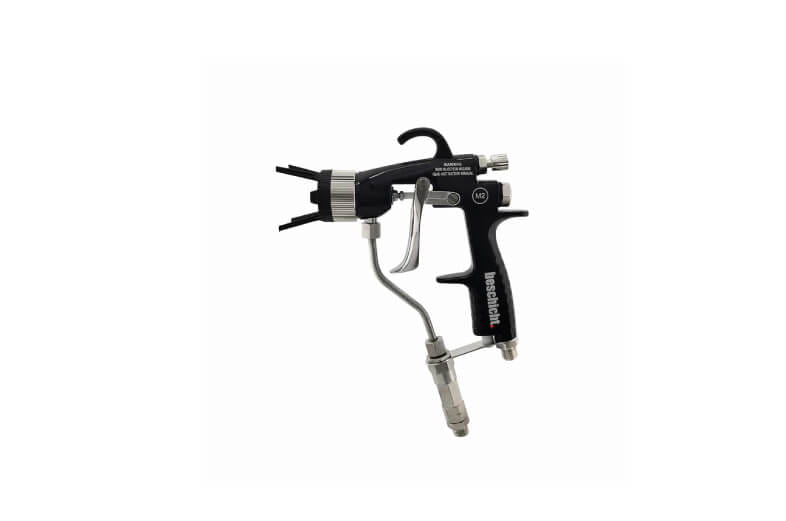
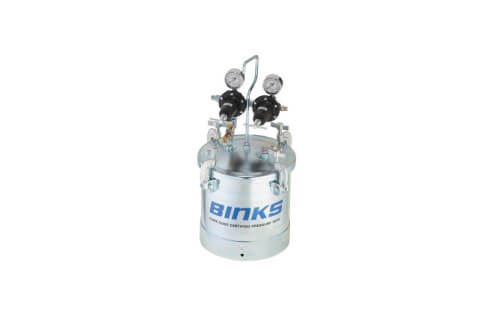
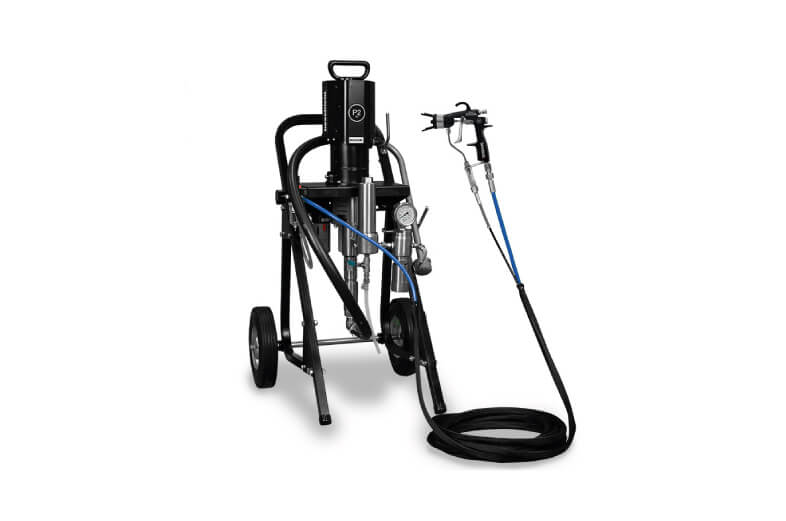
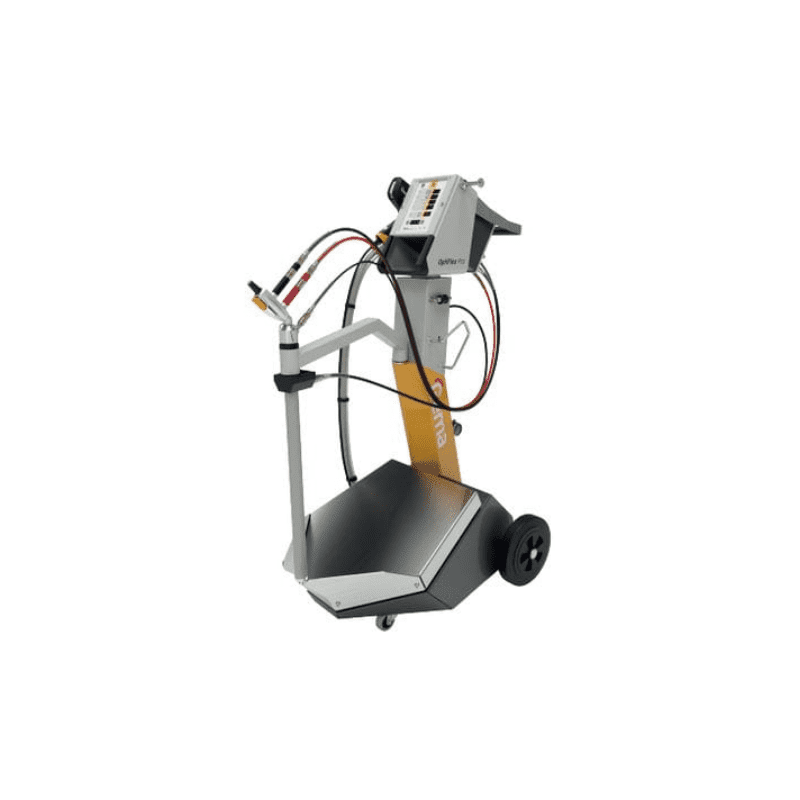

- Complete "Ready-to-spray" on a stable trolley
- Scope of delivery includes gun, nozzle, hose package, regulator & filters
- Technical data: max. 248 bar, max. 3.8 l/min

When surface quality, process reliability, and reproducible results matter, the setup is key: pressure control, filtration, the right nozzle, and a clean start/stop workflow. This article summarizes the relevant product data of the P2 P Piston Pump 30:1 Spraypack Ready and translates it into a practical workflow – without theoretical ballast.
Important: Settings are always dependent on the material and application. Where values are mentioned, understand them as guidelines within the technical limits of the system.
| Aspect | What you get with Spraypack Ready | Practical Benefit |
|---|---|---|
| Design | 30:1 piston pump on trolley (mobile) | Quick change of location, clean setup in daily use |
| Scope of delivery (Core) | Spray gun (AirCombi), nozzle (11/40), hose package (material & air) | Ready to start immediately – less risk of wrong purchase for basic equipment |
| Control & Filtration | High-pressure material regulator, high-pressure filter, air filter + gun air filter | Constant material flow, more stable results, fewer disruptions |
| Applications | AirCombi / AirCoat applications with higher material pressure | Good surfaces with controllable application |
| Material Range | Lacquers, glazes, stains, impregnations | Versatile – one setup for multiple product groups |
The following points are derived from the technical data and the supplied basic configuration. Use them as a starting point and compare them with the data sheet/processing specifications of your material.
- Pressure Range: Work within the system limits (max. 248 bar). Start conservatively and only increase until stable atomization/coverage is achieved.
- Air Supply: Air inlet pressure up to max. 8.3 bar (system limit). For constant results: keep pressure at the inlet stable, do not "pump".
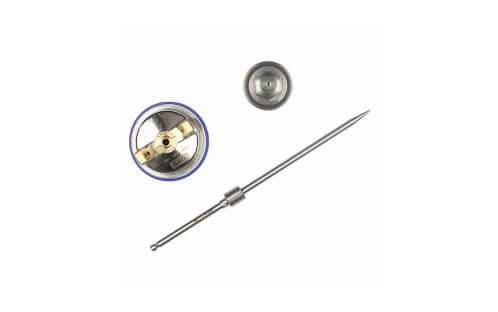
- Nozzle: Basic equipment contains an AirCombi nozzle 11/40 – a good starting point, then optimize via finish/material viscosity.
- Flow Rate: Max. 3.8 l/min (system limit). If there is "too much material", start with the regulator/process first, not just the trigger.
- Stroke Rate: System specification: max. 60 double strokes/min (as a technical limit). In practice, it is better to run evenly and calmly instead of going to the limit.
- Setup & Check: Position the trolley securely. Visual inspection: hoses, connections, filter housing, regulator position.
- Prepare Suction: Immerse/connect the suction hose cleanly. Place the material container so that the hose does not kink.
- Ramp up Pressure "Gently": Open the air supply and slowly build up the material pressure via the high-pressure regulator – Goal: even material flow.
- Spray Test Pattern: Brief test on a sample surface: atomization, edges, material quantity. Only readjust in small steps.
- Keep Spray Distance & Guidance Stable: Constant speed and even distance are the biggest quality levers – more than "one more bar".
- Correct Intermediate Stops: During breaks, reduce pressure in a controlled manner, keep the material path clean (no unnecessary air/material pulsation).
- Shut Down & Secure: Release pressure, secure the system, start rough cleaning (see maintenance).
- Stabilize material pressure via the high-pressure regulator in small steps (do not readjust hectically).
- Check filter path: check high-pressure filter, air filter, and gun air filter for dirt/clogging.
- Check hose routing: avoid kinks, tighten connections.
- Check suction hose: is it tight, is it correctly in the material, no air being drawn?
- Check regulator position and hose package: do not "choke" the flow unnecessarily.
- Check and clean filters if necessary (high-pressure filter first).
- Nozzle as a starting point: use the supplied 11/40, then optimize according to material/finish requirements.
- Keep guidance/distance constant (uniform speed, even overlap degree).
- Do not force pressure "too high" – rather a stable, reproducible point instead of maximum.
- Check air filter and gun air filter (clean air is mandatory for constant atomization).
- Keep air inlet pressure within system limits (max. 8.3 bar) and supply it stably.
- Check connections/leaks: leaks lead to unstable behavior.
- Filter Routine: Regularly check/clean high-pressure filter and air filter – especially when changing materials.
- Relieve Hoses: After use, release pressure cleanly and store hoses without kinks.
- Keep Suction Path Clean: Clean the suction hose, avoid material residues (prevents disruptions at the next start).
- Use Regulators Carefully: Do not misuse the regulator as an "on/off" switch – operate it evenly to ensure process stability.
- Check Mobile Unit: Regularly check the trolley/connections for tightness – transport loosens connections over time.
The P2 P 30:1 Spraypack Ready is designed as a fully equipped AirCombi/AirCoat setup for higher material pressures – with regulator, filters, gun, nozzle, and hose package. If you keep pressure and filtration stable, you get reproducible surfaces, fewer downtimes, and a setup that is quickly ready for use in everyday work.