Setting up WIWA VULKAN GX correctly – Reference values, workflow & quick troubleshooting
When sealants, adhesives, or high-viscosity media need to be processed cleanly and reproducibly, the right combination of model choice, pressure/transmission ratio, material guidance, and temperature control is crucial. The WIWA VULKAN GX series is modular (a total of 19 pumps in 4 performance classes) and can therefore be adapted very closely to your material and process.
What you get in this guide
- Model overview as a table (79.24, 79.45, 134.14, 134.26)
- Recommended basic settings as reference values (pressure/material dependent)
- Professional workflow (7 steps) + Troubleshooting + Maintenance

Product Overview: Variants, Application & Advantages
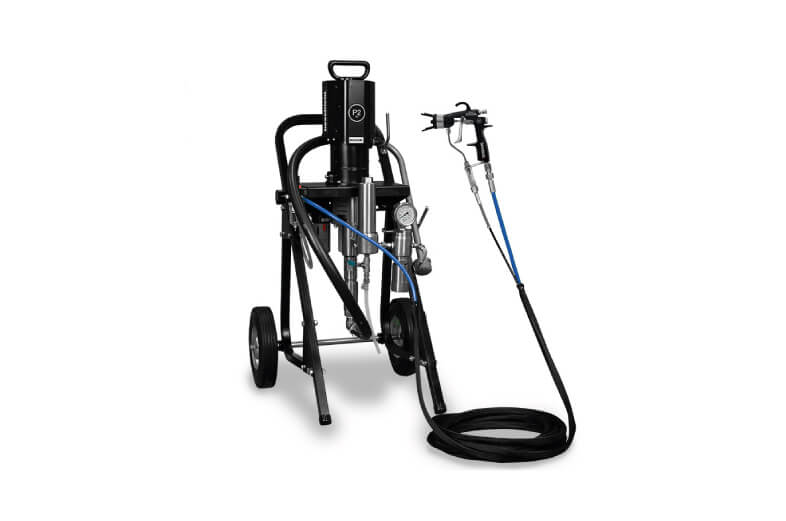
VULKAN GX pumps are designed for conveying, dosing, and applying viscous to high-viscosity materials – e.g., adhesives, sealants, lubricants, or pasty coating materials. For stable results, it is advisable to consider the model and accessories (e.g., follower plate/cover, drum press, material pressure regulator, heater) as a complete system.
| Model | Pressure Ratio | Output (per 60 cycles) | Max. Air Inlet | Max. Operating Pressure | Note |
|---|---|---|---|---|---|
| 79.24 | 24:1 | 4.74 l/min | 8 bar | 192 bar | Good entry level for medium pressures |
| 79.45 | 45:1 | 4.74 l/min | 8 bar | 360 bar | For higher material pressures at the same throughput |
| 134.14 | 14:1 | 8.04 l/min | 8 bar | 112 bar | Higher throughput, lower pressures |
| 134.26 | 26:1 | 8.04 l/min | 8 bar | 208 bar | Balance of throughput & pressure |
Note: The table is based on technical sample data of the VULKAN GX series. In practice, material viscosity, temperature, hose lengths, filters, and nozzle/applicator influence the actually achievable values.
CTA: Order the right model directly (max. 4 buttons)
Don't want to spend a long time comparing? Here are the 4 frequently requested variants on Beschicht.com – each in stainless steel (RS) for robust, rust-, and acid-resistant applications.
Recommended Basic Settings (derived from data – as reference values)
The following starting values are deliberately formulated as reference values. The basis is the technical maximum values of the models (e.g., 8 bar air inlet and model-dependent maximum operating pressures) as well as the measurement/control components mentioned in the system concept (pressure, flow, temperature). The goal is a smooth, low-pulsation material flow at sufficient working pressure – without unnecessary stress on seals, filters, and hose packages.
| Parameter | Start Reference Value | Why | When to increase? |
|---|---|---|---|
| Air Inlet Pressure | 2–4 bar | Gentle pump start; you work below the maximum values (often 8 bar) and feel your way towards the requirement. | When the material pressure/volume flow is insufficient or the medium "stalls" at low temperature. |
| Working Material Pressure | As low as possible, as high as necessary | Stable application without overshooting; material pressure regulators help to compensate for pulsation and maintain limits. | With long hoses, filters, small outlets/nozzles, or higher viscosity. |
| Temperature Control (Follower Plate) | 30–60 °C (Material dependent) | Less viscosity → less pressure requirement; for 200-liter drums, follower plates up to max. 85 °C are specified. | If the throughput fluctuates, the pump runs "sluggishly," or you see air/cavitation effects. |
| Monitoring | Pressure + Flow + Temperature | For reproducible quality: make parameters visible (e.g., display/control box, pressure sensor/manometer). | If you are automating, running several extraction points, or have narrow process windows. |
Important: Maximum values (e.g., 8 bar air inlet and model-dependent maximum operating pressures) are technical limits – not automatically optimal working values.
Professional Workflow (7 Steps) – from Setup to Stable Production
- Define Material & Target Values: desired application/volume flow, expected back pressure, temperature window.
- Choose the Right Model: lower pressure/more throughput (e.g., 134.14) vs. higher pressure (e.g., 79.45) – categorize based on ratio and maximum pressures.
- Ensure Correct Container Connection: choose follower plate/cover matching the container so that material is protected and air/cavitation is reduced.
- Activate Heater only if necessary: temper follower plate/hoses until the material flows evenly (for 200-liter drum, follower plate up to max. 85 °C as upper limit).
- Set up Regulation: use material pressure regulators (piston vs. diaphragm depending on medium) and ensure pressure limitation/even flow.
- Start Gently: start air inlet pressure low (e.g., 2–4 bar) and increase in small steps until application/flow is stable.
- "Lock In" Parameters: document pressure, flow, temperature and use as a reference for material/batch changes.
Troubleshooting: 4 Typical Problems & Quick Measures
- Use or correctly adjust material pressure regulators (regulators help to compensate for pulsation).
- Check filter condition; if necessary, design for a double-filter solution so that the flow does not break off.
- Do not "crank up" air pressure – increase in small steps.
- Check follower plate/cover matching the container (O-ring vs. lip seal, note inner Ø).
- Activate temperature control (follower plate/hose) to reduce viscosity and achieve an even flow.
- Check model/ratio: if necessary, switch to a higher ratio (e.g., 79.45 instead of 79.24) if your process needs high back pressure.
- Reduce/optimize hose lengths, filters, and outlet (pressure losses add up).
- Temper material if necessary (less viscosity = less pressure requirement).
- Choose the right design for the pressure regulator: diaphragm regulators are specifically mentioned for reactive/moisture-sensitive and abrasive media.
- Protect material from environmental influences (keep system closed, use matching follower plate/cover).
Maintenance: 5 Points that Prevent Failures
- Filter Maintenance: Check/change regularly – filters protect the system and stabilize the process.
- Check Temperature Control: Inspect heating components (follower plate/hoses) for even function, check cables/regulators.
- Calibrate Pressure/Measuring Chain: Verify manometers/sensors so you are not adjusting "blindly."
- Container Sealing: Inspect O-rings/lip seals of the follower plate/cover so that no air is drawn.
- Cleanliness: PTFE-coated components facilitate cleaning because less material adheres – useful for frequent changes.
FAQ (Practice-Oriented)
Conclusion
The WIWA VULKAN GX is powerful because it is modular: model (ratio/output), container guidance (follower plate/cover), regulation (material pressure regulator), and temperature control must work together. Start with conservative reference values, make pressure/flow/temperature measurable – and stabilize the material flow first before applying "more pressure." This way, you achieve reproducible results and reduce downtime.