Blasting kits
Blasting kits combine all essential test and measuring instruments
for surface preparation in a robust, portable case.
They include tools for determining surface cleanliness grades in accordance with ISO 8501,
for assessing the surface profile using a comparator or replica tape,
as well as instruments for checking dust and salt contamination (Bresle test).
The kits are complemented by measuring devices for climate and dew point (ΔT),
surface temperature, nozzle and line pressure and
flow rate.
All components are calibratable, mobile in use and comply with the relevant
ISO and ASTM standards.
Application & benefits
The kits are used in the steel construction industry, at shipyards, in
vessel and tank fabrication, in bridge construction and in
maintenance and refurbishment.
With the included instruments, surface cleanliness and profile can be reliably assessed,
dust and salt residues documented and the climate, including
dew point and surface temperature, monitored.
Pressure and flow rate values during the blasting process can also be checked.
The result: adhesion-ready surfaces, less rework and
fully documented preparation in line with the requirements of
ISO 8501–8503.
Measurement tasks & kit configuration
Surface cleanliness (ISO 8501):
Visual assessment of the surface using standardized
ISO 8501 reference panels to determine the cleanliness grade
(Sa 1 – Sa 3).
Additional photo documentation supports comparability
and traceability for approvals and audits.
Surface profile (ISO 8503 / ASTM D4417):
Determination of the surface profile using a comparator
or replica tape.
Both methods enable a standards-compliant assessment
of the surface texture prior to coating.
Dust & salt (ISO 8502-3 / -6 / -9):
Assessment of the dust level according to ISO 8502-3 using comparison charts
and additional documentation.
Determination of soluble salts using the Bresle test
(conductivity, ion concentration) in accordance with ISO 8502-6/-9.
Climate & dew point (ISO 8502-4):
Measurement of ΔT, relative humidity,
air temperature and surface temperature
to assess the risk of condensation and ensure optimum
coating conditions.
Pressure & flow:
Monitoring of nozzle and line pressure,
flow rate and compressed air quality.
Verification of drying, filtration and stability of the compressed air system
to ensure consistent blasting performance.
Documentation:
All measurement results are recorded digitally, linked with
labels/QR codes and automatically transferred into
test reports or audit documentation.
Product areas & integration
The product range includes standard and project-specific kits with
data loggers, interfaces and QA software for digital data acquisition.
Together with the user, we define the scope of testing, the relevant standards
and the measurement point plan, and integrate the systems directly into
QA workflows, photo and report archiving and
audit processes.
This makes blasting work traceable, compliant with standards and audit-ready documented.
Key benefits at a glance
- Everything in one case – practical selection for blasting operations
- Standards-compliant – ISO 8501/8502/8503, traceable calibration, certificates
- Digital documentation – data export, photos & traceability
- Less rework – clean, adhesion-ready surfaces within tolerance
Top manufacturers – blasting kits
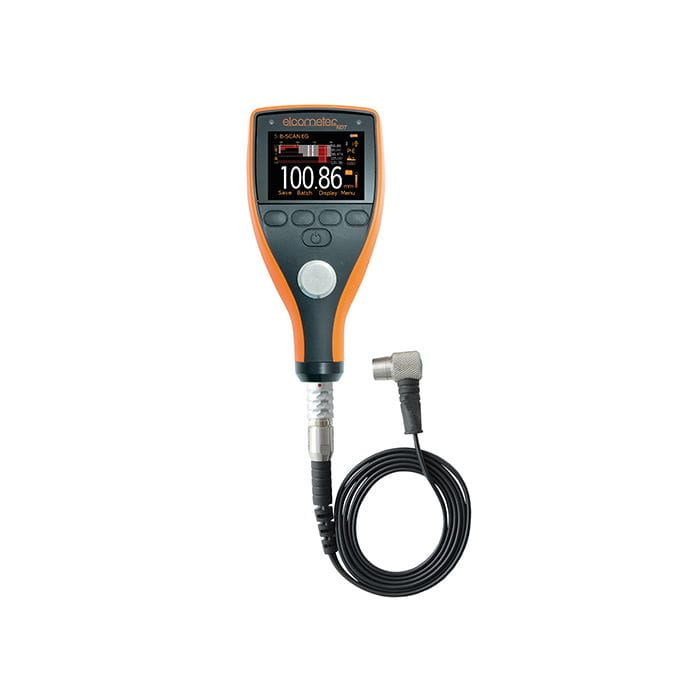
- Elcometer – ISO 850x tests: cleanliness, profile (comparator/replica), climate/ΔT & Bresle.
- DeFelsko – PosiTector/PosiTest for climate, salt, surface profile & documentation.
- BYK-Gardner – Visual assessment & lighting/gloss for appearance.
- TQC Sheen – Dust level, Bresle accessories, comparators & test equipment.
- Neurtek – Reference standards and climate/surface measurements.
- Mahr – Surface roughness and contour metrology for lab/QA.
- Rubert – Surface roughness reference plates & ISO 8503 comparison standards.
- 3M – Blasting tapes, masking/cleaning products & PPE.
- KSJ – Portable inspection/gloss instruments.
- Testo – Climate/dew point measurement according to ISO 8502-4.
- Datapaq/Fluke – Temperature/process loggers (e.g. post-treatment).
- PCE Instruments – Handheld instruments & loggers for field inspection.
- Extech – Environmental/electrical measurement on site.
- Rotronic – Humidity/temperature & data loggers.
- OMEGA – Sensors, probes & data acquisition.
- SATA – Accessories/test components for compressed air.
- Phoenix Instrument – Lab/test equipment & media analysis.
- LED Lenser – High-performance inspection lamps and magnifiers.
- SIS Verlag – Standards/guidelines & training materials.
- beschicht. – QA templates, calibration sets & custom cases.
Go directly to blasting kits –
or consulting & kit configuration.
Frequently asked questions about blasting kits
Which test instruments belong in a blasting kit?
Typically, there are reference/visual standards for cleanliness grades (ISO 8501),
surface profile measurement (comparator/replica, ASTM D4417), dust rating cards (ISO 8502-3),
Bresle test for soluble salts (ISO 8502-6/-9), climate and dew point measurement (ΔT, ISO 8502-4),
a surface thermometer, nozzle/line pressure gauge, flow/volume indicator,
an inspection lamp/magnifier as well as report templates and calibration accessories.
How do I choose the right blasting kit?
Selection depends on the substrate and target cleanliness grade (e.g. Sa 2½), the required surface profile,
applicable standards (ISO 8501/8502/8503, ASTM D4417), the working environment (shipyard, steel construction, tank),
the compressed air system (pressure/flow/drying), documentation needs (data loggers/interfaces) and
robustness (IP/ATEX environment). Traceable calibration certificates and suitable reference standards are essential.
What improves traceability, process safety and quality when using blasting kits?
A test and inspection plan for each component zone, ΔT approval before blasting, documented dust and salt tests,
a surface profile within the tolerance window, regular pressure/nozzle checks, complete photo/report documentation
and trained operators. Instrument monitoring and digital reports increase auditability and first-pass yield.