
Setting up the Sagola 3600 XPT Correcting: Pressure, Distance & Workflow for a Top Finish
When the atomization isn't "right," it's almost never due to "lack of power," but rather the combination of air cap, working pressure, material volume, and spraying distance. In this guide, you will find practical reference values (from the manual/manufacturer specs) plus a professional workflow—so that clear coats shine, base coats lay evenly, and overspray is reduced.
Product Overview: Variants, Application & Parameters (Reference Values)
The 3600 XPT works with dedicated XPT air caps for different materials (CLEAR/BASE/HVLP) – Goal: optimized atomization and a controlled fan pattern. Values below are guidelines and depend on material, temperature, viscosity, and setup.
| Variant | Typical Use | Working Pressure (Guideline) | Spraying Distance (Guideline) | Air Consumption (Guideline) |
|---|---|---|---|---|
| XPT CLEAR | Clear coat / Finish-oriented coatings | approx. 2.0 bar in the recommended range 1.4–2.2 bar | EPA: 15–20 cm | approx. 285 L/min |
| XPT BASE | Base coat / controlled, even application | approx. 2.0 bar in the recommended range 1.4–2.2 bar | EPA: 15–20 cm | approx. 285 L/min |
| XPT HVLP | HVLP-Setup (Transfer efficiency, reduce overspray) | 1.8 bar (HVLP guideline; do not "crank it up") | HVLP: 12–15 cm | approx. 360 L/min |
Note: Maximum inlet pressure is 4 bar. Nozzle sets Ø 1.20 / 1.30 / 1.40 are described for the 3600 XPT. (Guideline values from manual)
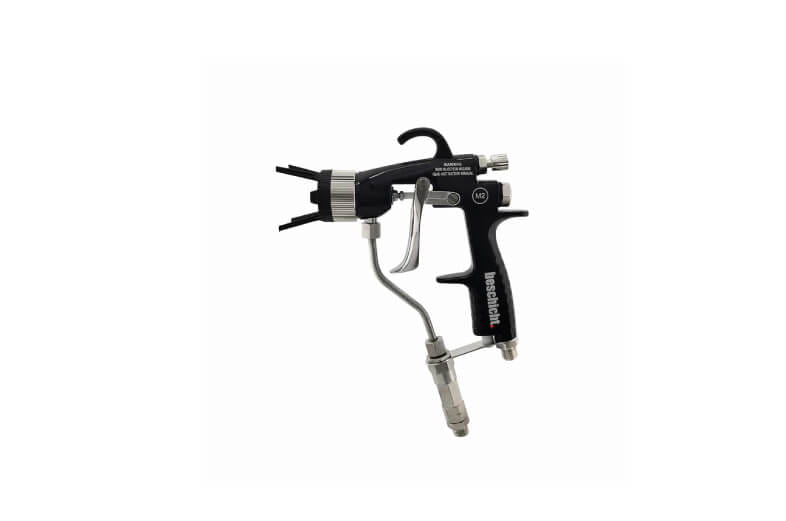
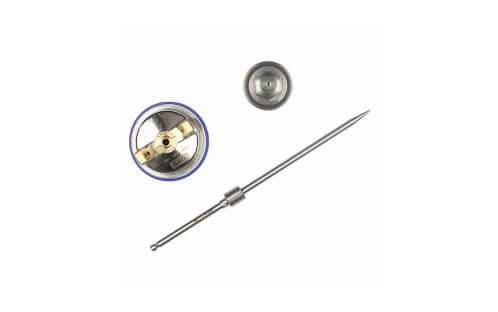
This is the Sagola 3600 XPT

The 3600 XPT is designed for thinned coating materials (e.g., paints/clear coats) and operates via trigger stages: first air, then material – ideal for controlling the start cleanly.
Pro Rule of Thumb: stabilize the pattern first (pressure + fan), then fine-tune the material volume – not the other way around.
3 KPI Levers to Immediately Improve Paint Application
Order Directly (3 Favorites)
Choose the variant suitable for your material (Clear coat/Base/HVLP) – then set up the pressure & distance.
Recommended Basic Settings (Guidelines from Manual)
- General working window: 1.4–2.2 bar
- HVLP guideline: 1.8 bar
- Maximum inlet pressure: 4 bar (do not exceed)
- EPA: 15–20 cm
- HVLP: 12–15 cm
- The closer, the wetter the application – work in a controlled manner
- Open Spray regulation & product regulator fully at first (without dismantling), then fine-tune via test pattern
- Goal: maximum yield & clean fan pattern
Guideline Logic: First stabilize pressure + fan, then adjust material volume so the layer thickness is correct. Too thin = air pressure relatively too high; too thick/grainy = material volume relatively too high.
Pro Workflow (5–7 Steps)
- Prepare material: mix according to manufacturer, filter, check viscosity – impurities are one of the most common causes of issues.
- Check the gun: all parts tight, no leaks; check especially after cleaning/service.
- Ensure clean air: remove oil/silicone/particles with a fine filter; use sufficient air volume & suitable hoses.
- Basic setup: set pressure in the target range (HVLP around 1.8 bar), start with fan on maximum, then adapt to the component.
- Spray test pattern: maintain distance (EPA 15–20 cm / HVLP 12–15 cm), lead the gun as perpendicularly as possible.
- Fine-tuning: If it looks too dry → lower air or correct material/viscosity; if it's too wet/grainy → lower material or adjust viscosity/nozzle set.
- Stay constant: keep speed & distance stable – most "finish errors" result from inconsistent movement, not the gun itself.
Troubleshooting: 4 Typical Problems & Quick Fixes
- Tighten the nozzle/outlet
- Clean the seat on the outlet body or replace damaged parts
- Check material level, open/adjust product regulator correctly
- Check air supply (too low/no pressure)
- Material too thick → thin appropriately; clean lines/nozzle
- Refill material, improve filtering (filter out impurities)
- Tighten nozzle; check for cracks and replace if necessary
- Check/replace needle packing at the head if leaking
- Clean the air nozzle; adjust the spray opening correctly
- Re-balance pressure & material volume; set viscosity appropriately
- In case of foreign bodies: clean/filter; replace incorrect nozzle+needle combination if needed
Maintenance: 5 Points to Keep the Gun "Like New"
- Clean after every use: Empty cup, flush with suitable solvent and atomize until everything is clean; wipe exterior surfaces with a soaked cloth.
- Treat the air nozzle as a precision part: soak if necessary and blow out with compressed air; no hard/metallic objects in the bores.
- Maintain product filter: clean or replace – a clogged filter leads to poor application and nozzle problems.
- Check regularly: Inspect wear parts and replace if necessary – ideally use original spare parts.
- Lubricate after cleaning: Lightly grease threads/friction zones (silicone-free), slightly regrease moving parts – especially after mechanical cleaning.
FAQ for Sagola 3600 XPT (Practical)
1) What pressure should I start with for the fastest results?
Start in the recommended range of 1.4–2.2 bar. For HVLP, 1.8 bar is the guideline. Then fine-trim via test pattern – do not exceed the maximum pressure.
2) Why is the application dry even though I'm giving "enough material"?
Often the air pressure is too high relative to the material volume or the distance is too great. Reduce pressure, correct distance, and check viscosity.
3) Which nozzle sets are described for the 3600 XPT?
The manual mentions Ø 1.20, 1.30, and 1.40 among others. The correct choice depends on the material, the desired layer thickness, and the viscosity.
4) Do I really have to filter?
Yes – impurities quickly lead to an intermittent spray, clogging, or messy atomization. A filter is the "cheapest insurance" for the finish.
5) Can I clean the gun in a washing machine?
Basically yes, but with rules: do not soak longer than necessary, do not use immediately after, and ensure no cleaning agent residues remain inside (otherwise risk of damage/warranty issues).
Conclusion: The Sagola 3600 XPT delivers visibly better results when treated as a system: choose the appropriate XPT air cap, keep the pressure in the target range, maintain consistent distance, and ensure clean air/filtration. With the test pattern setup and regular cleaning, you get a reproducible finish – whether clear coat, base, or HVLP.