Using the WIWA DUOMIX 333 GX PFP Correctly: Variants, Reference Values & Pro Workflow
When every minute counts in Passive Fire Protection (PFP), the coating must be perfect: a constant mixing ratio, stable delivery, and clean processing of intumescent materials – even in demanding environments. This guide shows you the WIWA DUOMIX 333 GX PFP in practice: variant comparison, key figures, reference values from manufacturer specifications, workflow, troubleshooting, and useful accessories.
Quick Navigation
- What is PFP – and why processing is so sensitive
- DUOMIX 333 GX PFP Variants: Which fits your application?
- Reference values (from datasheet) & recommended basic settings
- Pro Workflow (5–7 steps)
- Troubleshooting, maintenance & FAQ

Practical Tip: Reusing the image in another blog? Simply swap the link.
1) Explained briefly: PFP – when steel becomes critical under heat
Passive Fire Protection (PFP) aims to maintain the functionality of components (e.g., steel beams, pipelines, tanks) for a defined period of time. It becomes critical when the core temperature of the steel is reached – intumescent materials then typically react by foaming up and slowing down the heat input.
This is exactly why processing is demanding: high-build, often fiber-filled, pot-life sensitive – and any inaccuracy in mixing, temperature, or delivery quickly leads to rework.
2) Product Overview: DUOMIX 333 GX PFP Variants (incl. ATEX Zone 1)
| Variant | Mixing Ratio | Pressure Ratio | Max. Output* | Max. Operating Pressure* | Application | Order No. |
|---|---|---|---|---|---|---|
| Basic (2.33:1) | 2.33:1 | 61:1 | 19.7 l/min (at 60 DS) | 427 bar | Offshore / Oil & Gas / Corrosion Protection | 0671660 |
| Basic (1:1) | 1:1 | 66:1 | 18.4 l/min (at 60 DS) | 429 bar | Modularly adaptable to PFP materials | 0672375 |
| Premium (1:1) | 1:1 | 66:1 | 18.4 l/min (at 60 DS) | 429 bar | Measured values on display, radar level sensor, optional data logger | 0672376 |
| ATEX Zone 1 (1:1) | 1:1 | 66:1 | 18.4 l/min (at 60 DS) | 429 bar | Explosion-protected areas (Zone 1), pneumatic monitoring | 0672630 |
| ATEX Zone 1 (2.33:1) | 2.33:1 | 61:1 | 19.7 l/min (at 60 DS) | 427 bar | Explosion-protected areas (Zone 1) | 0672738 |
*Maximum values / manufacturer specifications. Operating values vary depending on material, hose package, nozzle, and environment.
3) KPI Boxes: What matters in daily work
Throughput
up to 19.7 l/min*
Helps to process high-build PFP structures economically – especially on larger surfaces.
Pressure Performance
up to 429 bar*
Reserve for viscous, fiber-filled materials and stable atomization (depending on setup).
Safety / Option
ATEX Zone 1
For applications in explosion-protected areas – with reduced electrical components.
Practical Tip (yellow box): Preheating shouldn't be "rule of thumb"
Take advantage of the ability to temper components separately and adjust the agitators: A stable material temperature + constant mixing typically reduces pressure peaks and makes delivery smoother. If available: use the timer function wisely to shorten the preheating phase – always in accordance with the material data sheet.
4) CTA: View variants directly (red buttons)
Choose the appropriate version (Basic / Premium / ATEX) – we deliver the right configuration for your application.
DUOMIX 333 GX PFP – Variant 1 DUOMIX 333 GX PFP – Variant 2 DUOMIX 333 GX PFP – Variant 3 DUOMIX 333 GX PFP – ATEX Zone 1 (A) DUOMIX 333 GX PFP – ATEX Zone 1 (B)5) Recommended Basic Settings (as reference values)
The following values are reference values/maximum values from manufacturer specifications and help with categorization. For your starting point, the material data sheet, nozzle, hose length, and environment always apply.
| Parameter | Reference Value / Range | Note |
|---|---|---|
| Mixing Ratio | 1:1 or 2.33:1 (variant dependent) | Choose variant to match PFP material. |
| Max. Operating Pressure | up to 427–429 bar* | Working pressure depending on atomization/setup. |
| Max. Output | 18.4–19.7 l/min* (at 60 DS) | Helps with high-build applications. |
| Pressure Ratio | 61:1 or 66:1 (variant dependent) | Classification of performance reserve. |
| ATEX Use | Zone 1 (with ATEX version) | Designed for explosion-protected areas. |
*Manufacturer specification (maximum values) – in operation depending on the overall system.
6) Pro Workflow (6 steps)
- Safety & Application Check: Check material data sheet, environment, and if necessary, ATEX zone. Determine appropriate DUOMIX variant (1:1 or 2.33:1).
- Prepare Material: Homogenize components (agitators), check containers/fill levels (depending on equipment, e.g., radar or pneumatic monitoring).
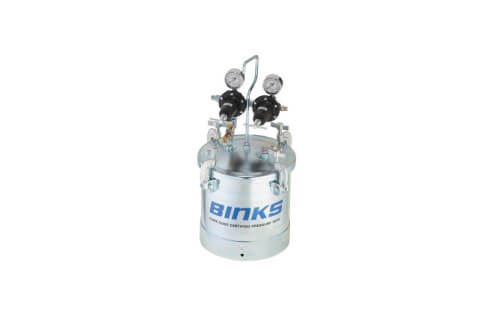
- Stabilize Tempering: Use pressure tanks/heaters until processing runs smoothly. Goal: constant delivery without "surging".
- Ratio & Function Check: Spray a short test, assess mixing pattern. Optional: process monitoring (e.g., flow control accessories) for mixing ratio/delivery volume.
- Coating in Zones: First edges/connections, then surfaces. For thick layers, prefer uniform coats rather than "flooding".
- Documentation & Completion: Record values (Premium display / optional data logger), plan cleaning/flushing according to material requirements.
7) Troubleshooting (4 typical problems)
Problem A: Mixing ratio seems "off" (A/B does not look right visually)
- Check fill levels (use sensors/monitoring) and stir material sufficiently.
- Perform a test application before starting the main surface; if necessary, use ratio-based process control.
- Check variant: 1:1 vs. 2.33:1 must match the material.
Problem B: Unsteady spray / fluctuating output
- Stabilize tempering (use heaters / heated pressure tanks), then test again.
- Keep material paths "clear" (large passages, suitable gun/hose package).
- Check agitator setting: insufficient stirring can make delivery unstable.
Problem C: Runs on vertical surfaces / surface "breaks"
- Use material flow heaters: can reduce runs and often helps to work solvent/energy-efficiently.
- Work in uniform layers rather than building up "too wet".
- Verify atomization and layer build-up in a test area.
Problem D: Handling in robotic/serial process uncertain
- Add process monitoring (e.g., flow control accessories to display mixing ratio/delivery volume).
- Document values (display/data logger) to detect deviations early.
- Standard checklist per shift (fill levels, agitators, temperature, test spray).
8) Maintenance (5 points, practical)
- Regularly check/clean material-carrying parts – especially with fiber-filled PFP systems.
- Briefly test sensors/monitoring (fill level, contact manometer) before starting the shift.
- Keep an eye on heating circuits & tempering: stable temperature = stable process.
- Check hose package, couplings, and gun for continuity (large cross-sections are crucial).
- Maintain accessories (gun, heater, flow control) according to manufacturer specifications – spare parts are typically available.
9) Video (optional)
Tip: If iFrames are restricted in the Shopware editor, use the link as a button instead.
10) FAQ (practice-relevant)
1) Which DUOMIX variant do I need: 1:1 or 2.33:1?
This depends on the PFP material system. The DUOMIX 333 GX PFP is designed in variants with 1:1 and 2.33:1 – choose according to the material data sheet and specification.
2) What does "GX PFP" stand for in everyday use?
It is a design for PFP coatings with a focus on process-reliable delivery of thick, demanding materials – including modular configuration.
3) Can I work in Zone 1 with it?
Yes, with the ATEX version (Zone 1). There, electrical components are reduced and monitoring is designed with pneumatic protection.
4) Which accessories provide the greatest practical benefit?
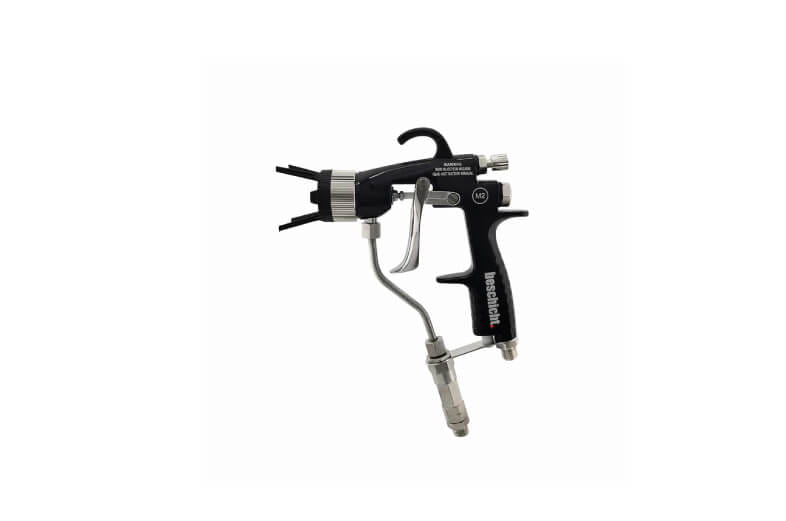
For PFP, a gun with large material passages (e.g., WIWA 500 F), material flow heaters and – for automated processes – flow control monitoring are typically useful.
5) How do I get more process transparency?
Premium versions show measured values on a display; optionally, a data logger can record operating data clearly – helpful for quality assurance and repeatability.
Conclusion
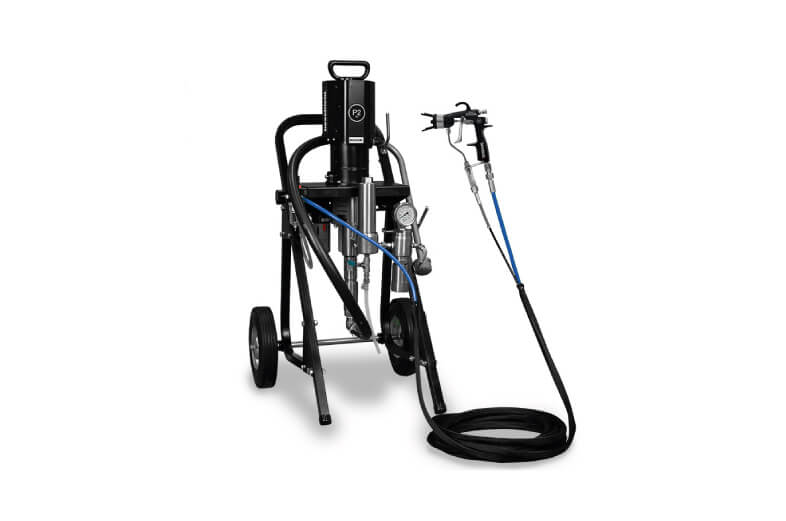
The WIWA DUOMIX 333 GX PFP is a powerful 2K system for intumescent PFP materials – especially when throughput, pressure reserve, and process reliability count. With the right variant (1:1 or 2.33:1), stable tempering, clean test workflow, and matching accessories, you reduce rework and increase reproducibility – even in ATEX environments.