
SAGOLA 3300 GTO: The Ultimate Practical Guide for Professional Spray Guns
The SAGOLA 3300 GTO is a high-performance spray gun for demanding applications in automotive refinishing, woodworking, and industry. This guide explains the technology, setup, maintenance, and provides professional tips for perfect results.

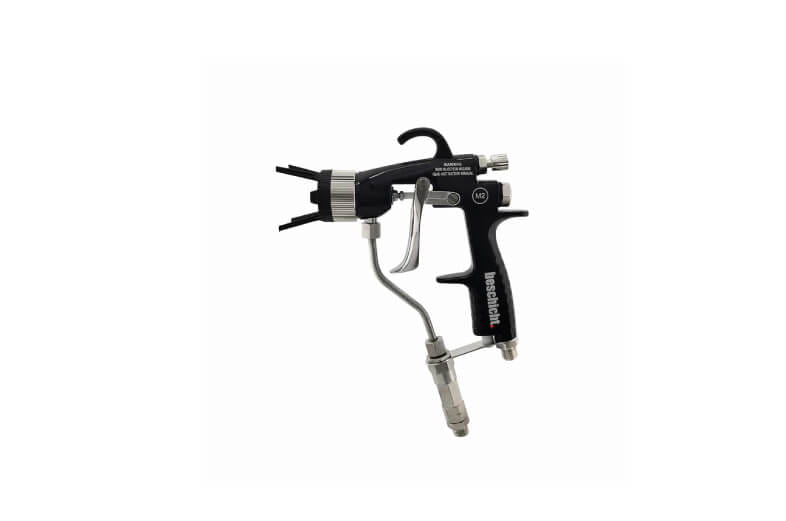
The SAGOLA 3300 GTO in the pressure-feed version – versatile and precise.
Product Overview: Variants & Applications
| Variant | Application | Advantages |
|---|---|---|
| Gravity Feed | Fine work, frequent color changes | Easy cleaning, low air consumption |
| Suction Feed | Medium to large surfaces | Good material delivery, flexible paint containers |
| Pressure Feed | Large surfaces, high throughput rates | Constant supply, suitable for thick materials |
High Transfer Efficiency
Over 65% transfer efficiency – less overspray, more efficiency, and cost savings.
Precise Control
Separate controls for material flow, fan width, and air flow for maximum control.
ATEX Compliant
Suitable for potentially explosive areas (Zone 1 & 2) when using antistatic hoses.
Ready for Perfect Results?
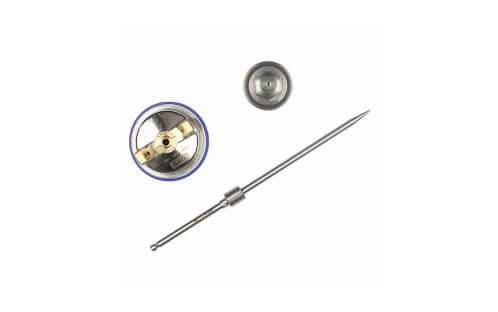
Discover the SAGOLA 3300 GTO with HVLP air cap and stainless steel needle set in our shop.
View SAGOLA 3300 GTO in the ShopRecommended Base Settings (Guidelines)
| Parameter | HVLP Nozzle | EPA Nozzle | Note |
|---|---|---|---|
| Inlet Pressure | max. 1.8 bar | approx. 2 bar | Never exceed 4 bar (max. pressure) |
| Spray Distance | 12–15 cm | 15–20 cm | Depends on product & climate |
| Air Consumption | ~360 l/min | ~250 l/min | Consider compressor capacity |
Note: Values are based on manufacturer specifications and should be considered a starting point. Adjust depending on product (viscosity) and environmental conditions.
Professional Workflow in 7 Steps
- Preparation: Mix product according to manufacturer instructions, filter it, and check correct viscosity (SAGOLA viscometer recommended).
- Check the Gun: After cleaning/repair, ensure all parts are firmly seated and hoses are leak-free.
- Set Pressure: First adjust air pressure at the compressor (line pressure). Then fine-tune using the gun’s internal flow regulator (counterclockwise = more pressure).
- Adjust Material Flow: Open the product regulator until a uniform spray stream is achieved. Rule of thumb: as little as possible, as much as necessary.
- Adjust Fan Width: Turn the fan control until the desired spray pattern (round or oval) is achieved.
- Test Spray: Spray on a test surface. Evaluate film thickness, flow, and drying. Adjust pressure, distance, or viscosity if needed.
- Application: Always hold the gun perpendicular (90°) to the surface and move it in even, overlapping passes at a constant speed.
Troubleshooting: 4 Common Problems
1. Spray Pattern Is Uneven or Runs
- Cause: Too much material with too little air pressure.
- Solution: Reduce material flow or slightly increase air pressure. Check viscosity (thin if necessary).
2. Excessive Overspray
- Cause: Pressure too high, distance too great, or worn nozzle.
- Solution: Reduce pressure, decrease distance to 10–20 cm, inspect nozzle/needle for damage.
3. Gun Does Not Spray or Sprays Intermittently
- Cause: Clogged product filter, dirty nozzle/needle, or leaking seal.
- Solution: Clean/replace filter, soak nozzle/needle in thinner and clean with compressed air, check seals (packing).
4. Bubbles in the Paint Cup
- Cause: Loose fluid nozzle or dirty/damaged nozzle seat.
- Solution: Tighten nozzle. Clean the seat or replace if damaged.
Maintenance Checklist
- After each use: Clean gun and cup immediately with suitable thinner. Blow out air channels.
- Product filter: Clean or replace regularly – contamination leads to finish defects.
- Seals (packing): Replace self-adjusting seals if leaks occur at needle or valve.
- Moving parts: Lightly lubricate after cleaning with SAE 10 oil or petroleum jelly. Do not use silicone-based grease.
- Nozzles & needles: Never clean with hard or sharp objects. Use only soft brushes and thinner.
FAQ – Frequently Asked Questions
Which nozzle size do I need?
The choice depends on material and viscosity. As a guideline: Thin paints/basecoats: 1.2–1.4 mm. Filler primers: 1.6–1.8 mm. Thick paints/primers: 2.0–2.2 mm. SAGOLA offers kits from 1.0 to 2.8 mm.
How do I properly clean the air cap?
Never use metal or sharp objects! Soak the air cap in thinner, clean with a soft brush, and blow dry with compressed air. If clogged, use SAGOLA cleaning needles.
Can I use any paint?
The gun is compatible with most brand-name products. Always check chemical compatibility with gun materials (aluminum, stainless steel, PTFE, POM, nylon) before use. Do not use highly corrosive or abrasive products.
Why is air quality so important?
Oil, water, or particles in compressed air ruin the spray result. Always use a combination filter (carbon filter + fine filter) such as the SAGOLA 5200X/5300X series before the gun.
Which hoses are mandatory?
For ATEX areas and safety: use antistatic hoses with a minimum inner diameter of 8 mm and proper grounding. This prevents dangerous electrostatic charging.
Conclusion
The SAGOLA 3300 GTO is a versatile and durable professional spray gun that delivers excellent, high-quality results when correctly set up and regularly maintained. The key to success lies in understanding the interaction between pressure, material flow, viscosity, and spray technique. Use the guidelines provided here as a starting point and adapt them to your specific conditions.